
The cheapest thing you can do before a five-figure decision.
A camera pass costs a few hundred dollars and it’s the only thing that turns a sewer guess into a sewer diagnosis. Ask for the footage. It’s your pipe and you’re entitled to see it.
A sewer camera inspection sends a self-locating camera down your main line from a cleanout, showing the pipe's condition and marking the depth and surface position of any defect. It runs $175 to $400 in the East Valley. It’s the only way to know whether a repeat clog is a blockage or a broken pipe, and it should precede any sewer repair quote.
The three questions a camera answers
First: is the pipe intact? A camera distinguishes a soft blockage from a crack, an offset joint, a belly holding standing water, or a section that has deformed or collapsed. Second: where exactly, and how deep? The camera head transmits a signal that a locator picks up from the surface, so we can mark the spot in your yard and state the depth. That single fact separates a $1,000 spot repair from a $19,000 full replacement. Third: what’s the pipe made of? Cast iron, PVC, ABS, and clay have completely different failure profiles and completely different repair options, and in subdivisions built after 1990 the answer is usually plastic.
Buying a house
A standard home inspection doesn’t include a sewer camera. It’s a separate service, usually a separate vendor, and it’s routinely skipped because it costs a few hundred dollars in a transaction where everyone is already spending. The honest version of the risk depends on the part of the valley: in older areas like Scottsdale, where most housing predates 2000, age-related failure is plausible. In newer areas what a camera finds is more often workmanship. A belly from poor bedding, debris left in the line during construction, or a joint that was never right. Both are far cheaper to discover before closing than after.
What the footage should show you
Ask for it, and ask for it as a file rather than a glance at a screen in a driveway. A useful inspection gives you a continuous run from the cleanout to the city connection, footage markers so defects are located along the run, and a stated depth and surface mark for anything that needs repair. If a contractor shows you thirty seconds of a root ball and starts quoting a replacement, ask to see the rest of the line. The condition of the other ninety feet decides whether you’re looking at a spot repair or a full lateral.
What it can’t tell you
A camera sees the inside surface. It doesn’t measure wall thickness, so a cast iron line can look passable on camera while being substantially thinned. It can’t see through standing water in a belly, which is exactly where you most want to look, so the line often needs to be jetted or drained first. And it doesn’t price the repair. It produces the facts the price is built from.
Where this page cites a utility, permit or housing figure for a specific town, it’s that town’s published data. Your own city’s water report applies to your tap and your city’s building department sets your permit rules; ask us which apply to your address.
When to put a camera in the line
Two blockages in the same line in a year is a condition, not a coincidence. The camera tells you which condition.
The standard home inspection doesn’t include this. A failed lateral discovered after closing is entirely yours.
A dig quote produced without footage is a guess. Ask what they saw before you compare numbers.
Roots and collapse both stop an auger. They cost very different amounts to fix and only a camera separates them.
Wastewater escaping a lateral surfaces eventually. Locating the break precisely is what keeps the excavation small.
What a camera pass runs in the East Valley
Priced as its own service and frequently discounted when bundled with drain cleaning or jetting. The variables are access, line length, and whether the line has to be cleared before the camera can see anything.
Compiled 2026-08-21 from published Phoenix-metro price guides (plumbingpriceguide.com/phoenix-plumbing-cost, phoenixplumbingauthority.com, desertrainplumbing.com, plumbingphoenixpros.com), which carry a local figure for this job. Those guides put a sewer camera inspection at $175–$400 for the Phoenix metro. Individual pages run $150–$300 and $190–$475, and a Phoenix cost-report aggregator lands near $235–$269. The pre-purchase-with-report row is my own split of the same service rather than a separately published figure. These are metro-wide planning guides, not a quote: only the plumber standing in your house can give you one.
The diagnostic fee comes off the repair. We charge a service call to come out and diagnose the problem. If you approve the work, that fee is credited against it in full. You hear the fee on the phone before anyone drives, and it’s the same number at every location.
How the inspection runs
We go in at the cleanout
We put the camera in at the exterior cleanout wherever one exists. No cleanout means pulling a toilet or going through a roof vent, which adds cost before you see anything.
We clear the line first if we have to
A camera can’t see through standing water or a solid blockage. Sometimes we have to snake or jet before we can look, and that’s a legitimate additional charge.
We run the full lateral
Cleanout to the city connection, with footage markers. We show you the whole run, not just the defect we would quote.
We locate the defects and mark them
The camera head transmits and we pick it up with a surface locator. You end up holding a marked spot in your yard and a stated depth.
What this job looks like when we do it.
Not stock, not a rendering, and nothing generated. Every photograph on this site is an actual plumbing job in an actual house.
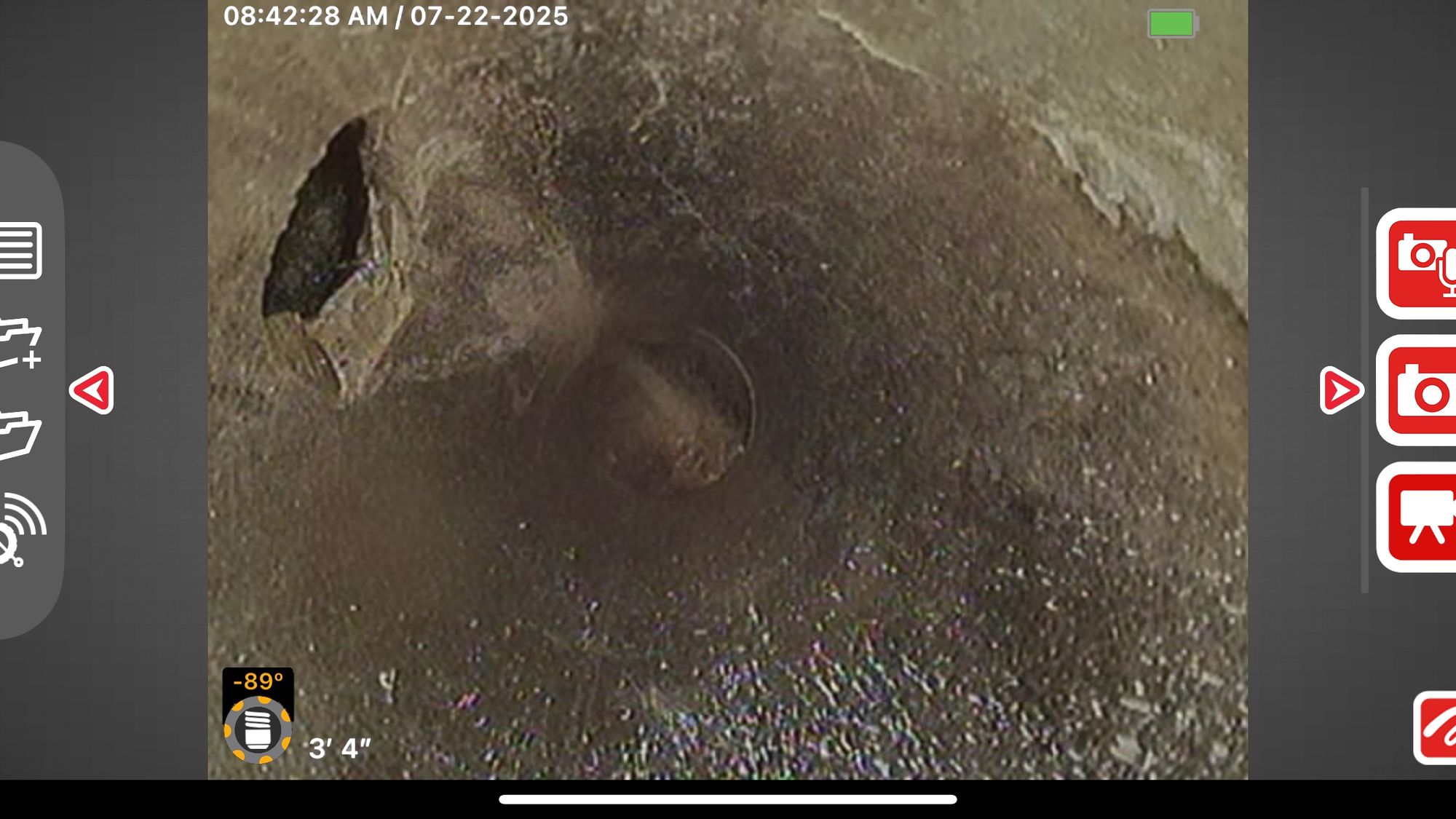
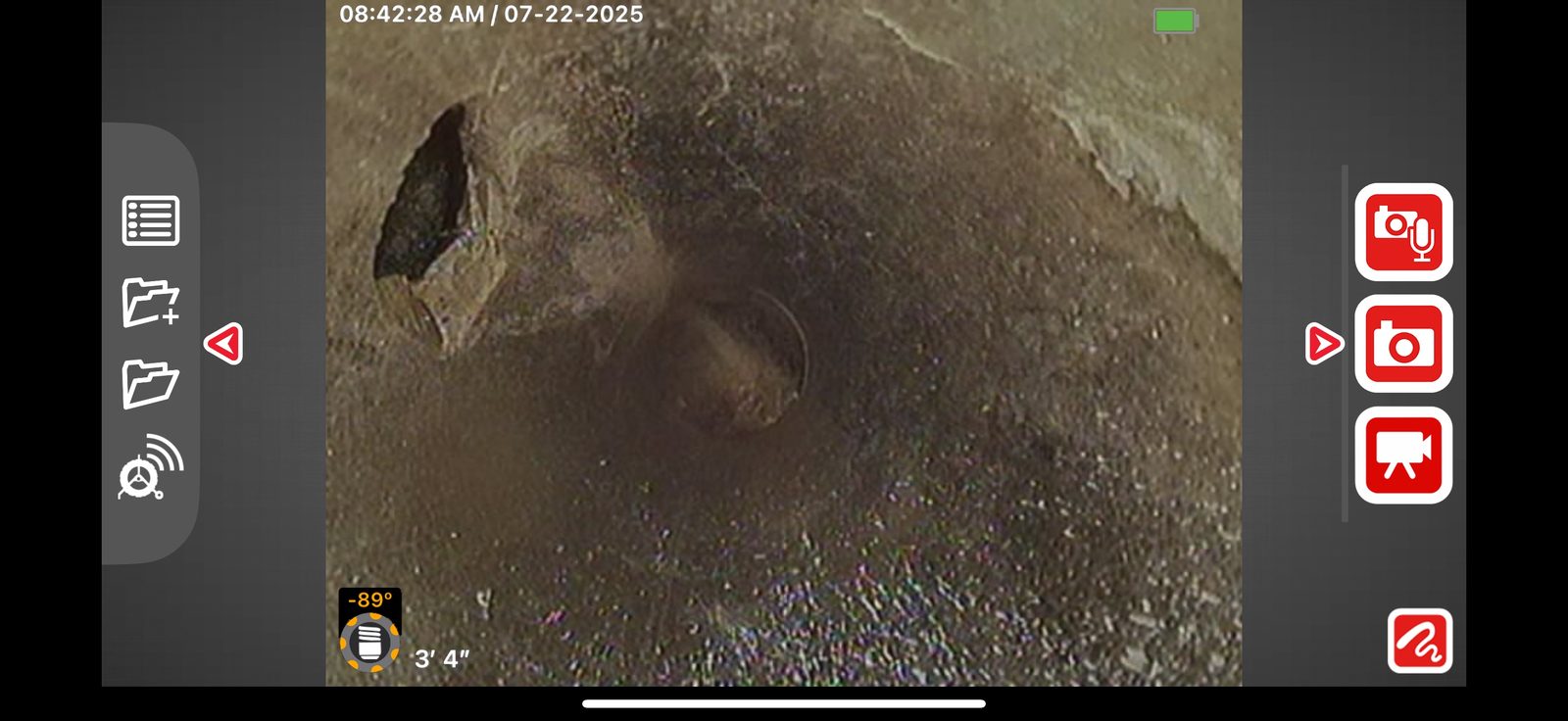 Camera in the lateral, 3 ft 4 in
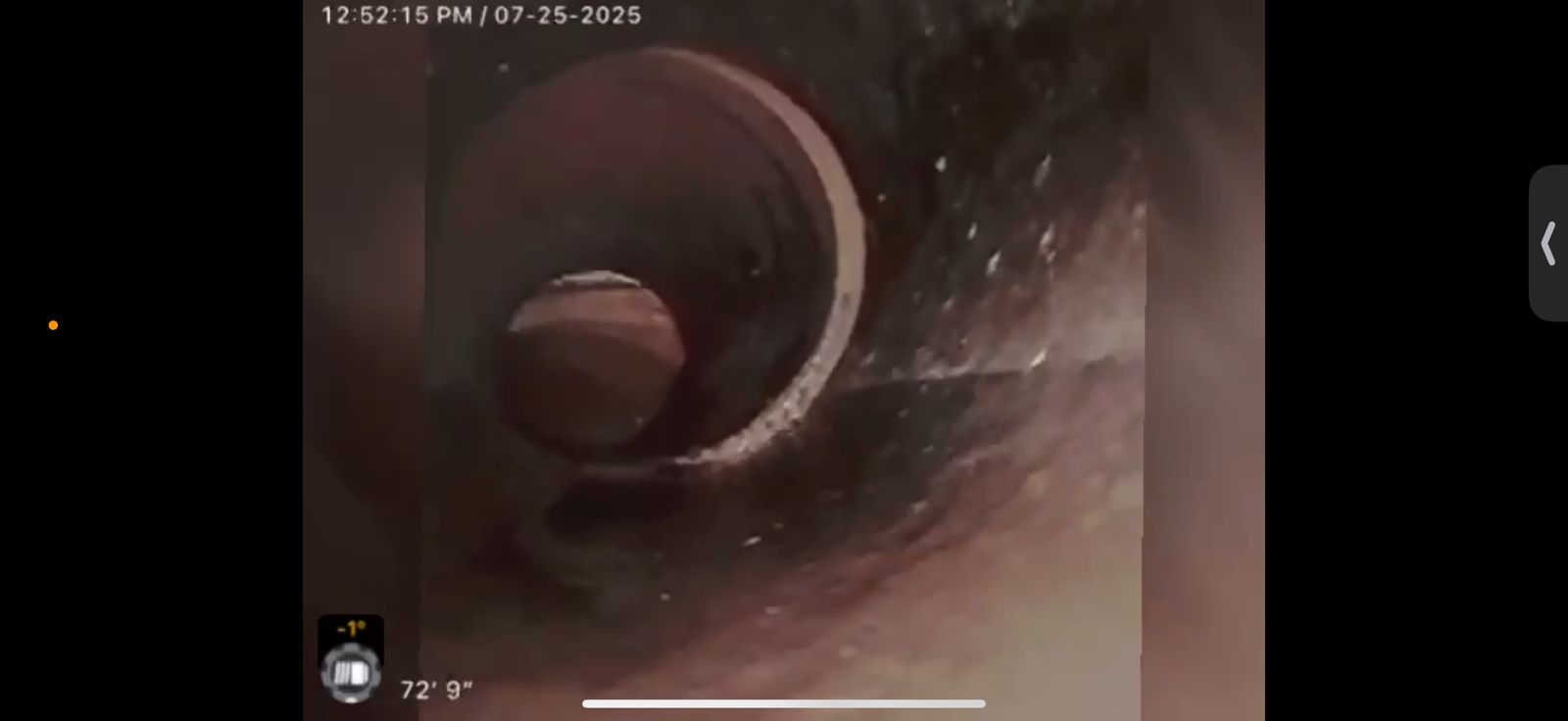 Camera in the lateral, 72 ft 9 in
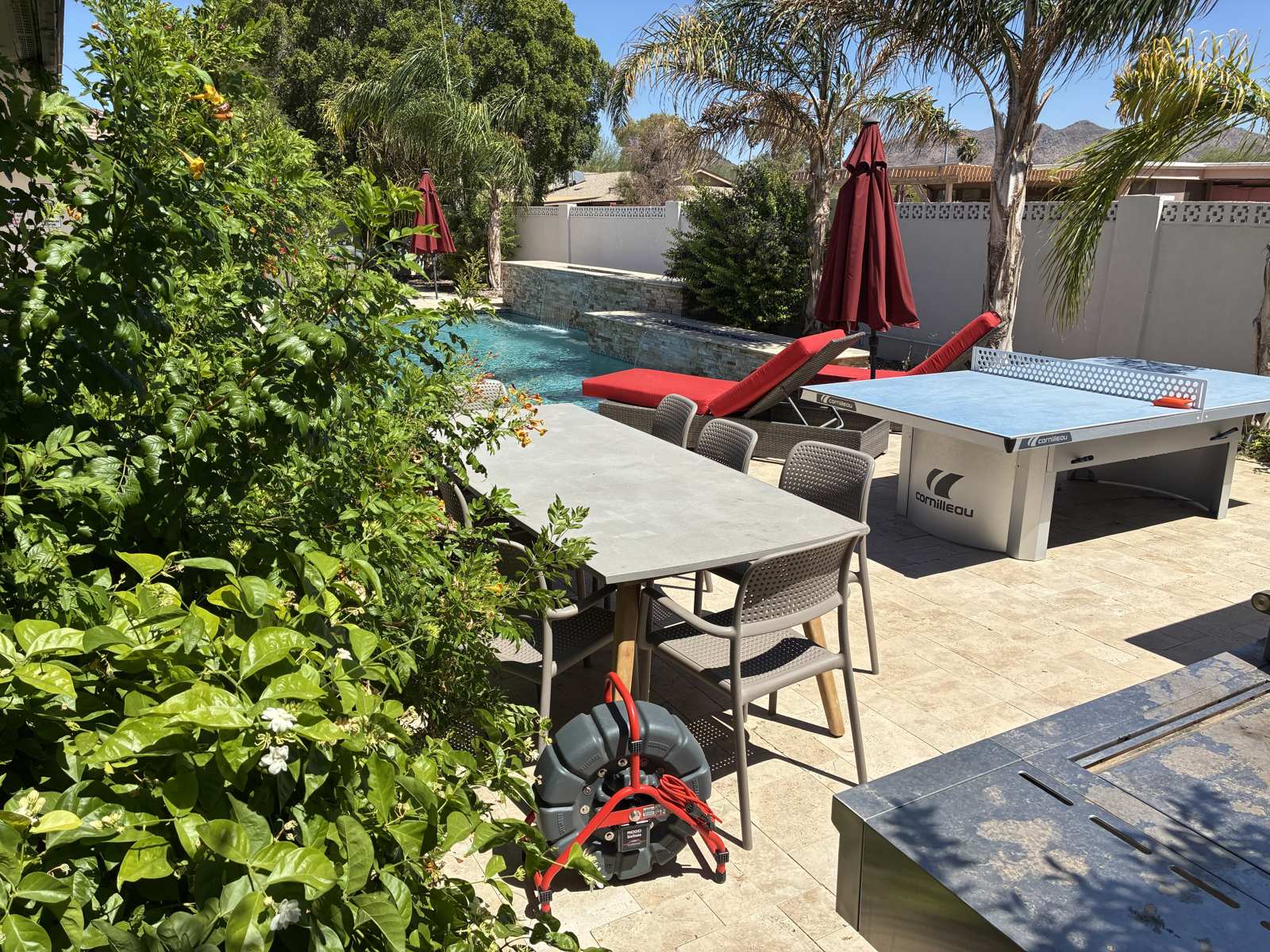 Camera inspection on a pool-deck job
Where a camera pass pays for itself
The older parts of the valley are where age-related failure is plausible. Everywhere else the camera is looking for a bedding or workmanship defect, which is exactly what a pre-purchase pass is good at finding.
Answers, not a brochure.
Should I get a sewer camera inspection when buying a house?
On an older house, yes, and understand that your standard home inspection almost certainly doesn’t include it. It’s a separate service costing a few hundred dollars in a transaction where a failed lateral is a five-figure item that becomes entirely yours at closing. On newer construction the risk is lower but not zero. The common defect there is workmanship, such as a belly from poor bedding or debris left in the line during the build.
Can a camera tell if I need a full sewer replacement?
It gives you the facts that decide it, which isn’t quite the same thing. The camera shows where the defects are, how many there are, and how they’re distributed along the run. One crack at forty feet in an otherwise sound line is a spot repair. Multiple offsets, a belly, and deteriorating pipe along the whole lateral is a replacement. Ask to see the full run rather than the clip of the worst spot, because the other ninety feet is what decides the scope.
Is the camera inspection included with drain cleaning?
Sometimes bundled at a reduced rate, rarely free, and never assume it. Ask for the bundled price before the visit rather than after. Be aware that a camera may not be usable on the same trip: it can’t see through standing water or a solid blockage, so the line often has to be cleared first, and on a fully backed-up main that means the drain cleaning has to happen before the camera earns its money.
What does a sewer camera not show?
Wall thickness, which is the important limitation on cast iron. A cast iron lateral can present an acceptable interior surface on camera while being significantly thinned from the outside in. It also can’t see through standing water, so a belly, the exact defect you most want to characterize, often has to be drained or jetted before it can be assessed. And it doesn’t price the repair. It produces the facts a price gets built from.
Can I get a copy of the footage?
Yes, and ask for it as a file, not as a look at a screen in your driveway. It’s a recording of your property and there’s no good reason to withhold it. The footage is also the single most useful thing you can hand a second contractor for a comparison quote, which is exactly why it’s worth having in your possession before you start collecting numbers on a repair.
Ask for the footage as a file. It's the best thing you can hand a second contractor.