
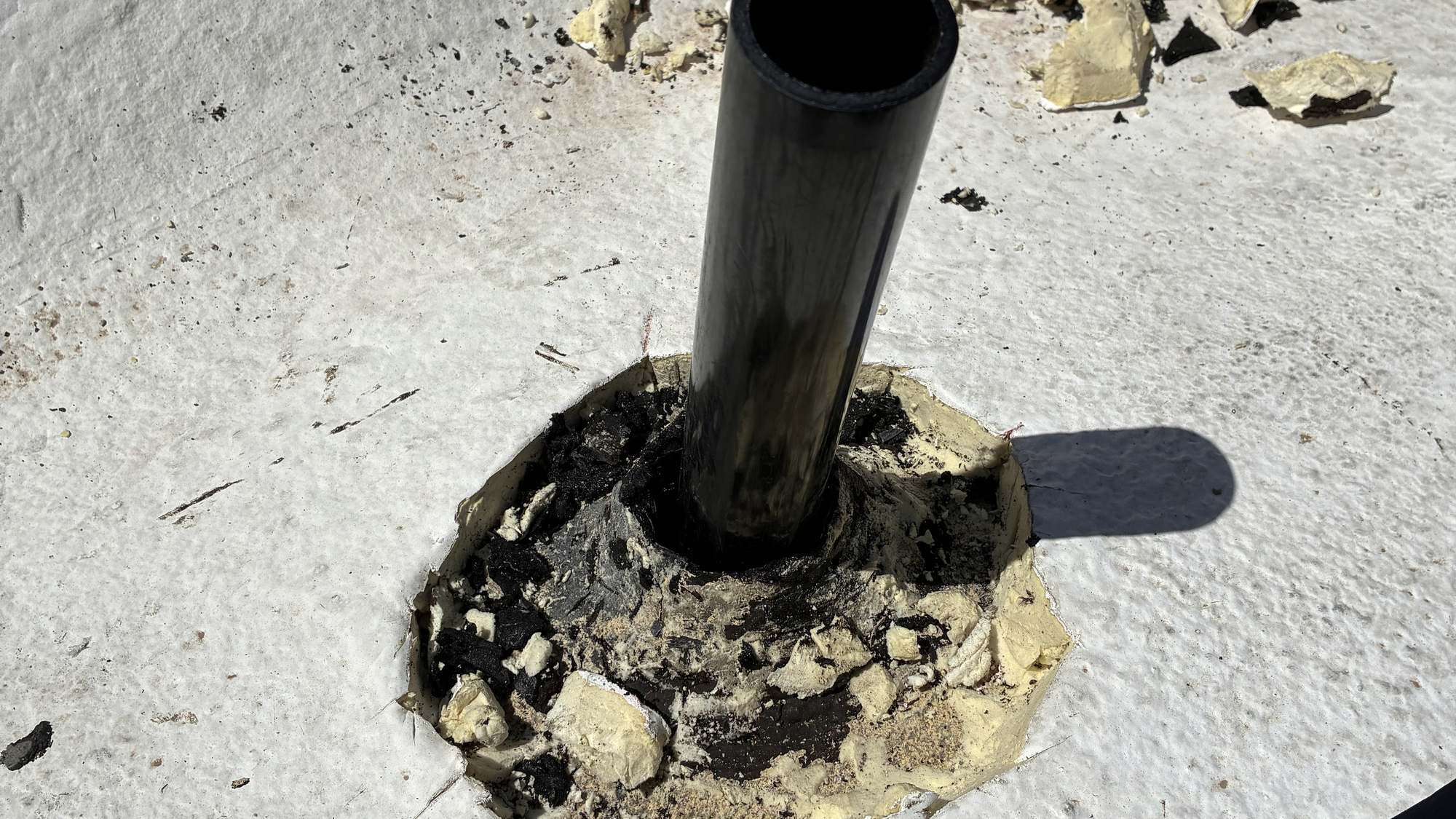
One slow drain is a clog. Every slow drain is a different problem.
That distinction decides everything: the tool, the price, and whether a camera should go in before anyone quotes a repair. You can make the call yourself in about thirty seconds.
If one fixture drains slowly, the clog is in that fixture's branch line and a standard snake usually clears it for $150 to $250. If several fixtures back up at once, especially the lowest ones, the blockage is in the main line, which is a different job at $250 to $350 and a strong reason to put a camera down the line before anyone quotes a repair.
The thirty-second diagnosis you can do yourself
Run water in a bathroom sink and watch the tub in the same bathroom. Then flush the toilet and watch the shower. If a fixture gurgles or backs up when a different fixture drains, you’re past the branch line and into shared drainage: main line territory. If only one fixture is slow and nothing else reacts, the clog is local to it. Tell us which of those two you observed and you’ve narrowed our work substantially before we arrive, and you’ll get a much more honest price range on the phone.
What actually clogs a drain here
Kitchen lines close up with grease and food solids, and hard water doesn’t help: mineral builds a rough interior surface that grease sticks to far more readily than smooth pipe. Bathroom lines close up with hair and soap, and soap scum in hard water is a genuinely stickier substance than soap scum in soft water. Main lines close up with all of the above, and occasionally with roots finding a joint. Be skeptical of the version of that story you usually hear, though. The “your old clay sewer pipe is full of roots” pitch fits the oldest pockets of the valley and almost none of the subdivisions built after 1990, where plastic drainage was already standard. Roots do get into PVC joints, and it’s worth ruling in or out with a camera, but it’s not the default explanation it is in an older city.
When snaking is the wrong tool
A cable snake punches a hole through a blockage. That restores flow, which is what you wanted today. What it doesn’t do is remove the scale and grease lining the pipe wall, which is why a snaked kitchen line often reclogs within months. Hydro jetting scours the pipe wall back toward its original diameter and is the correct tool when a line has repeatedly closed. And if a main line clogs more than about twice in a year, the question stops being what’s blocking it and becomes what’s wrong with it. A belly, a break, a root intrusion, or offset joints. That question is answered by a camera, not by another snake.
The access nobody thinks about until they need it
A main line clean is far easier and cheaper through a proper cleanout. Most East Valley houses have one outside near where the sewer leaves the building, often a capped pipe at ground level. Find yours now and clear the shrub that has grown over it. If there’s no accessible cleanout, we have to pull a toilet or go through a roof vent, and both add time and cost to what should be a routine call.
Where this page cites a utility, permit or housing figure for a specific town, it’s that town’s published data. Your own city’s water report applies to your tap and your city’s building department sets your permit rules; ask us which apply to your address.
Reading the drain before you call
A branch line clog. A standard snake through that fixture's trap arm clears the great majority of these.
Two fixtures sharing drainage means the blockage is downstream of both. Main line, not branch.
The washing machine dumps a large volume fast, and a restricted main pushes air back through the nearest trap.
A main line backup fills from the bottom. A shower pan or floor drain on the ground level is the first casualty.
Snaking opened a channel through a lined pipe rather than cleaning it. This is a jetting or camera conversation.
Traps being siphoned or a main line venting badly. Worth a same-day call rather than a wait-and-see.
What drain cleaning runs in the East Valley
A branch line clog is quick and well-priced. A main line is more work and more access. Repeat visits on the same line should push the conversation toward a camera rather than a third snake.
Compiled 2026-08-21 from published Phoenix-metro price guides (plumbingpriceguide.com/phoenix-plumbing-cost, phoenixplumbingauthority.com, desertrainplumbing.com, plumbingphoenixpros.com), which carry a local figure for this job. Those guides put routine drain cleaning at $150–$350 for the Phoenix metro. Individual pages run lower on a simple fixture snake (one lists $120–$200, another $95–$330) so the bottom of this range is deliberately not the cheapest figure published. Access items are added on top. These are metro-wide planning guides, not a quote: only the plumber standing in your house can give you one.
The diagnostic fee comes off the repair. We charge a service call to come out and diagnose the problem. If you approve the work, that fee is credited against it in full. You hear the fee on the phone before anyone drives, and it’s the same number at every location.
How the call runs
We ask which fixtures
Which ones are slow, and which ones react to each other. Your answer is the sentence that decides which tool comes off our truck.
We find the access
Cleanout first, then the fixture, then a roof vent as a last resort. Access is most of the difference between a cheap call and an expensive one.
We clear the line, then run it
We cable through the blockage, then run water long enough to confirm it drains at volume rather than trickling through a punched hole.
We tell you what it felt like
We'll tell you whether the cable hit soft grease, hard scale, or something that felt like roots. That sentence decides whether you need a camera.
What this job looks like when we do it.
Not stock, not a rendering, and nothing generated. Every photograph on this site is an actual plumbing job in an actual house.
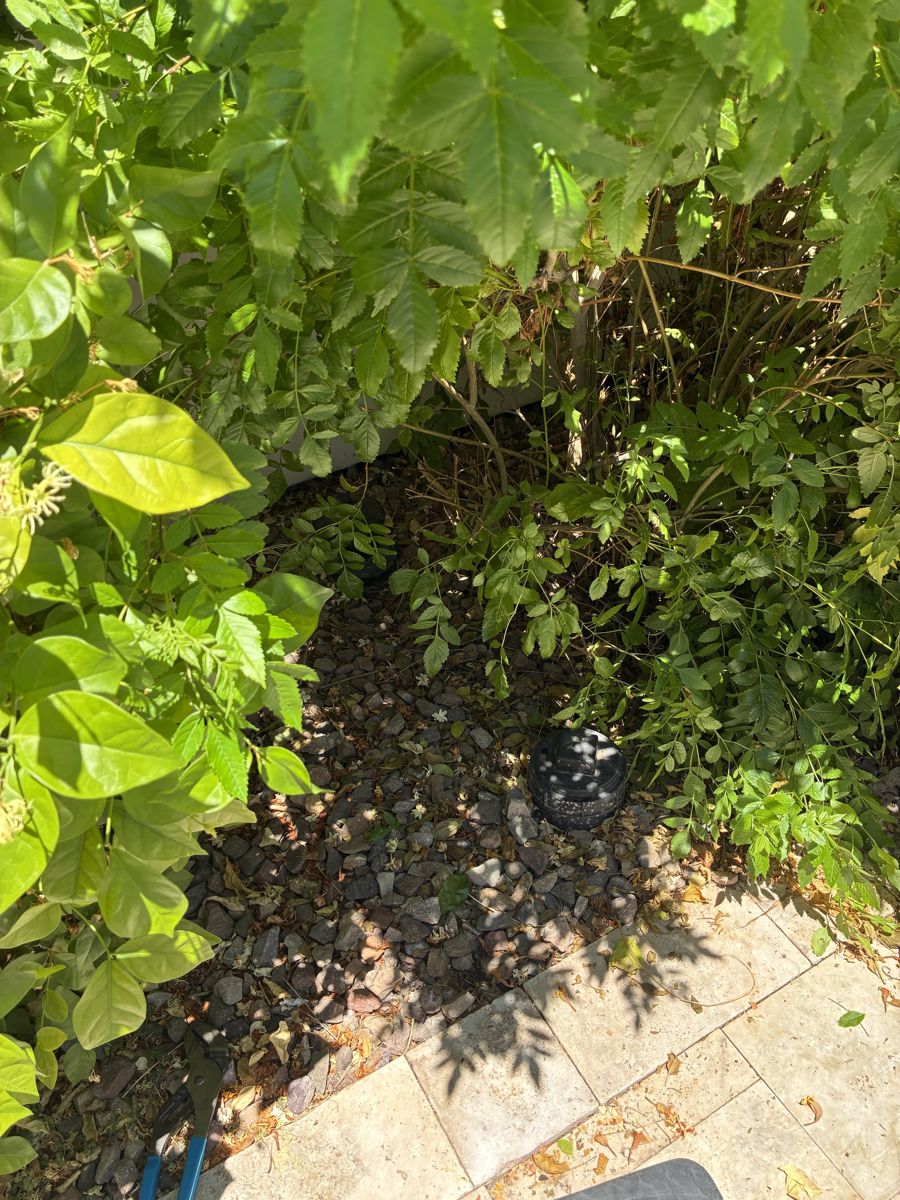 Find your cleanout before you need it
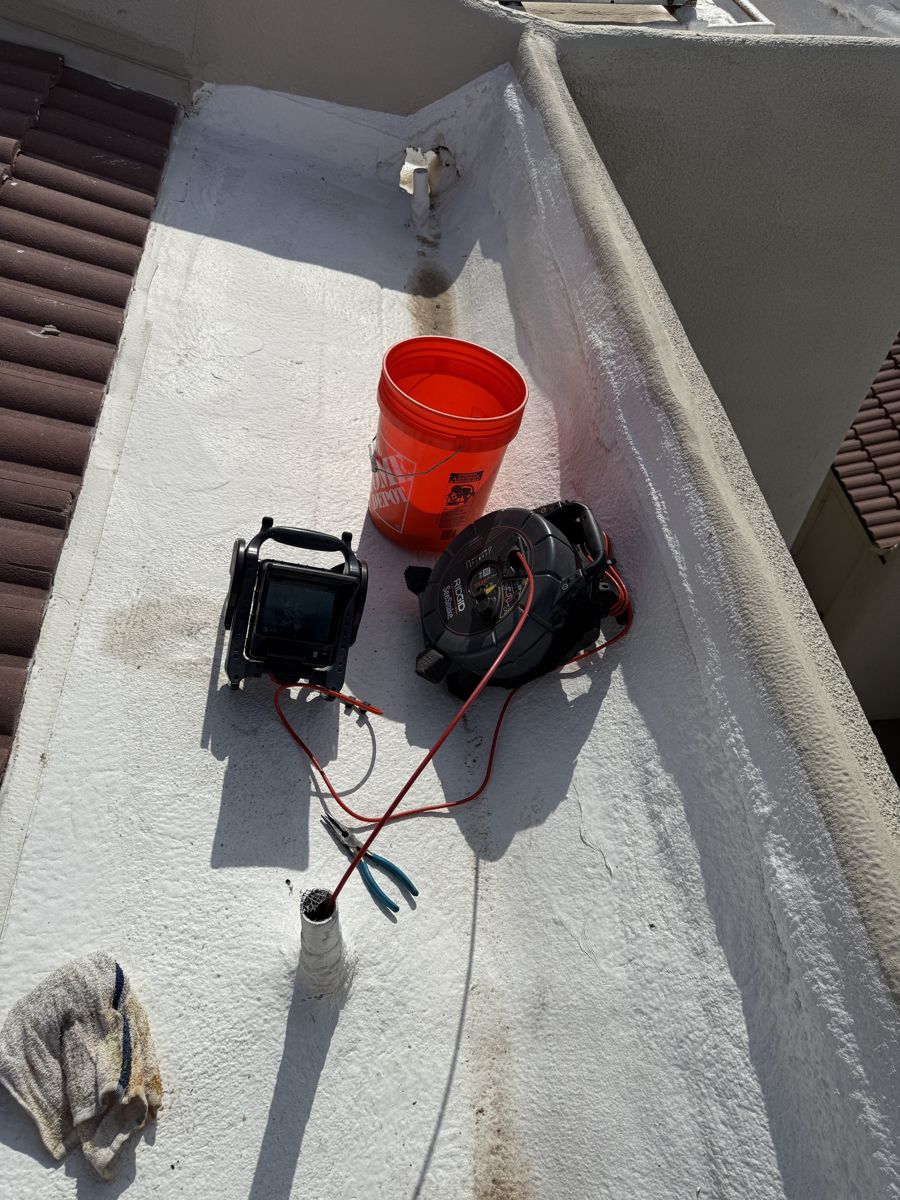 No cleanout: going in through the roof vent
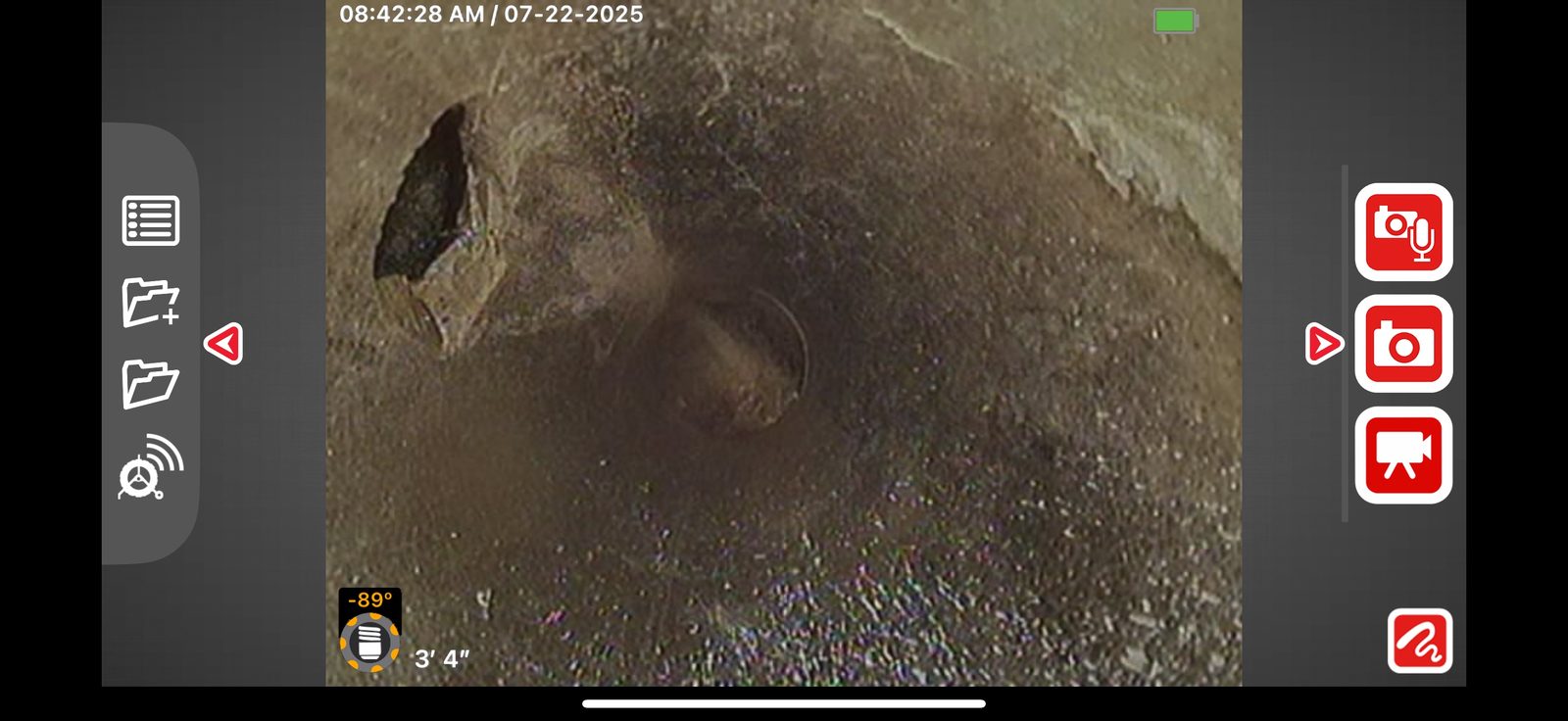 Camera in the lateral, 3 ft 4 in
Drain calls across the East Valley
Branch line clogs happen in every house regardless of age. Main line calls skew toward the older parts of the valley and toward newer builds with a bedding or workmanship defect.
Answers, not a brochure.
How do I know if it's one drain or the main line?
Test the relationship between fixtures. Run the bathroom sink and watch the tub. Flush the toilet and watch the shower. Run the washing machine and listen at the nearest floor drain. If one fixture reacts to another, the blockage is downstream of both and you’re in main line territory. If a single fixture is slow and nothing else responds, it’s a branch clog. That one observation changes the tool, the access, and the price.
Are chemical drain cleaners safe to use first?
A poor first move and occasionally an expensive one. Caustic cleaners generate heat, and heat in a PVC drain line or an old trap isn’t doing you a favor. They rarely clear a full blockage either. They open a channel through it, the same partial result as snaking. And if it doesn’t clear, we now have to work in a line full of caustic liquid. A drum auger is a better first attempt.
Why does my kitchen drain keep clogging?
Because snaking punches through grease rather than removing it, and hard water makes the pipe wall a better surface for grease to stick to: mineral scale gives grease a rough surface to build on. Once a kitchen line has reclogged twice, hydro jetting is the tool that actually restores the pipe’s diameter rather than reopening a channel through the buildup.
Where is the cleanout on my house?
Usually outside, at ground level, near where the sewer line leaves the building: commonly on the side of the house closest to the street, sometimes near the front hose bib. Look for a capped pipe three to four inches across, often white or black, sometimes in a small round box flush with the ground. Find it before you need it and clear whatever has grown over it. Its absence adds real cost to every future main line call.
Should I get a camera inspection with the drain cleaning?
Not on a first clog in a single fixture. That’s a straightforward blockage and a camera is money spent to confirm what the snake already told you. Do get one when the same line has clogged twice, when the blockage is in the main, or when the cable feels like it’s hitting something that doesn’t give. At that point you’re no longer asking what’s blocking the pipe. You’re asking what’s wrong with the pipe, and only a camera answers that.
Is a slow drain an emergency?
A single slow fixture isn’t. A main line backing up is close to one, because there’s nowhere for the household's wastewater to go and the next flush ends up on your floor. If the lowest fixtures in the house are backing up, stop using water throughout the house, which buys you time, and get someone out the same day rather than paying an after-hours premium at midnight.
Tell us which fixtures are slow and whether they react to each other. That decides the truck.