
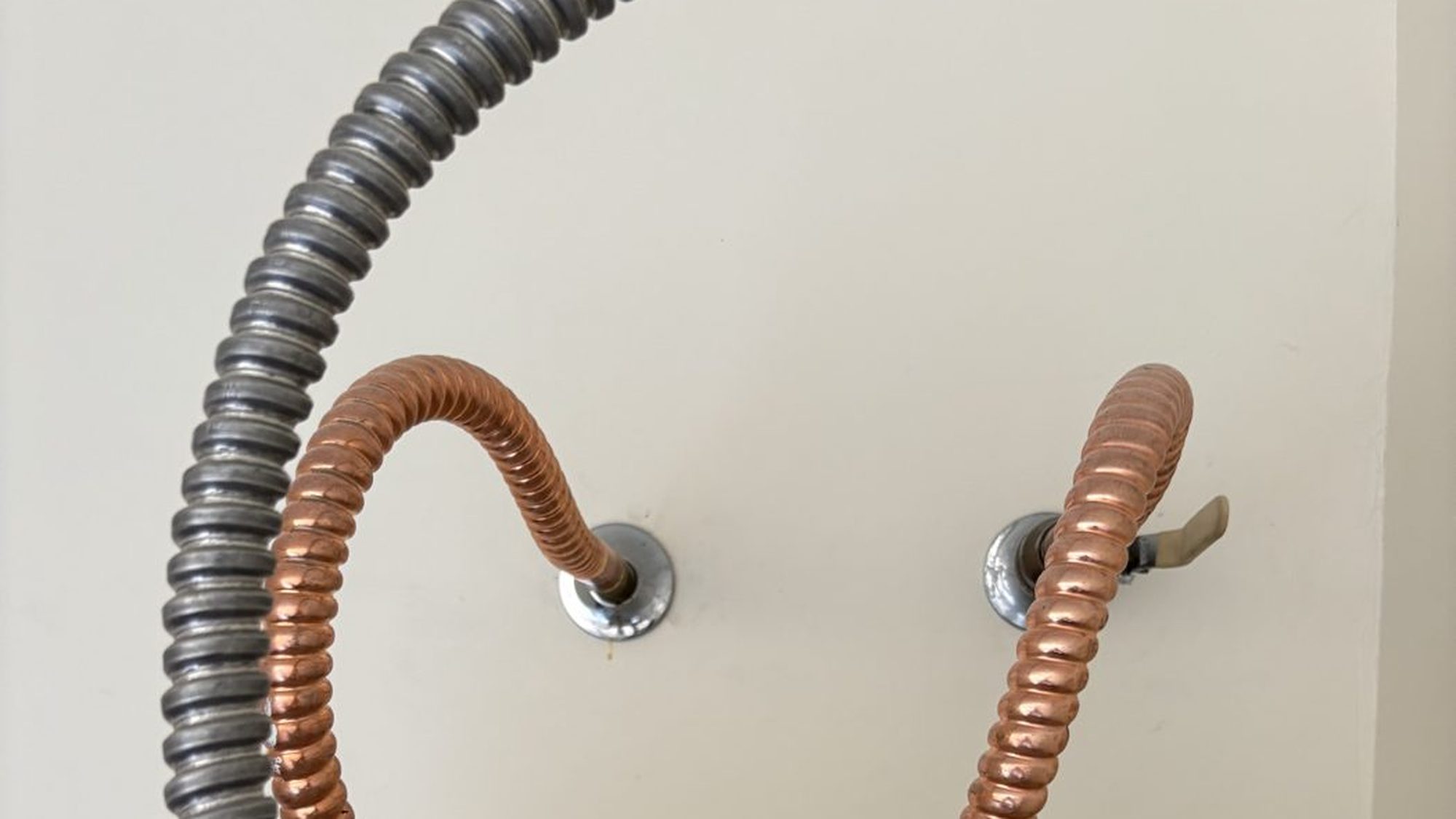
The tank is the cheap part. The install is the part worth checking.
Two quotes on the same heater can differ by a thousand dollars, and it’s almost never the appliance. It’s the pan, the expansion tank, the relief discharge, the disposal, and whether the old code items got fixed.
A 40 to 50 gallon water heater installed in the East Valley typically runs $1,100 to $2,600, covering removal and disposal of the old unit, the new heater, connections, a drain pan, and testing. The single most common addition is a thermal expansion tank, which the plumbing code requires wherever a pressure-reducing valve or check valve makes the house a closed system.
What a complete install actually includes
Ask for the scope in writing and look for six things: removal and disposal of the old unit, the new heater and its warranty, water and fuel connections, a drain pan piped somewhere harmless, a properly routed relief discharge, and an expansion tank if the system is closed. A quote missing three of those isn’t cheaper, it’s smaller. The gap between an $1,100 install and a $2,600 install is mostly these items plus access. An attic unit or a tight closet costs real labor that a garage install doesn’t.
Why the expansion tank keeps appearing
The plumbing code requires thermal expansion control wherever a check valve, backflow preventer, or pressure-reducing valve prevents water from flowing back toward the main on a storage water heater’s supply. That configuration makes the system closed, and water expands when heated with nowhere to go, spiking pressure every cycle, which is why a dripping relief valve so often traces back to a missing expansion tank rather than a bad valve. Whether it applies to you is a question about your house: does your heater’s cold supply pass through one of those devices. Ask us to point at it. The requirement is written for storage water heaters, so a tankless unit doesn’t trigger it.
Sizing it for the house, not the square footage
Capacity follows simultaneous demand. Two to three people generally land on 40 gallons, three to four on 50, and larger households or homes with a deep soaking tub go up from there. Resist oversizing by reflex. In hard water a larger tank means more standing water depositing more scale, and in an unconditioned garage it means more standby heat loss through the summer. If you consistently run out during the morning rush, that’s a sizing problem worth solving. If you ran out once when guests were over, it’s not.
The details an inspector checks
Wall strapping, combustion air on a gas unit, vent connector rise and slope, the relief discharge terminating where the local code says it must and never into a closed drain, the pan drain, dielectric unions where dissimilar metals meet, and a shutoff on the cold inlet. None of it’s exotic. It’s the list that separates a heater that was installed from a heater that was set in place.
Whether you need a permit
It depends on your city. Some East Valley cities exempt a like-for-like tank replacement when a licensed contractor does it; none of them exempt a tankless conversion or an upsize in BTU or amperage, and a homeowner doing the swap isn’t exempt anywhere. We know which rule applies to your address, and where a permit is required it goes on the written quote as its own line. Note that where an exemption exists it’s conditioned on who does the work, which is a fairly direct statement by the city about doing this one yourself.
Where this page cites a utility, permit or housing figure for a specific town, it’s that town’s published data. Your own city’s water report applies to your tap and your city’s building department sets your permit rules; ask us which apply to your address.
When you're replacing rather than repairing
A tank leaking from the bottom seam has corroded through. No part fixes that, at any price.
In hard water and hot garages, a significant repair on an eight-year-old tank is money into a short runway.
The standard rule, and it holds. At that ratio you’re buying a partial warranty on an old tank.
Hot side only, persisting after a flush, usually means the tank lining and anode are both gone.
One failure is a part. Two on the same unit in twelve months is the appliance telling you where it’s in its life.
What an install runs in the East Valley
Fuel type, capacity, and location drive most of it. An attic or closet install carries real extra labor over a garage unit, and the code catch-up items are where two quotes quietly diverge.
Compiled 2026-08-21 from published Phoenix-metro price guides (plumbingpriceguide.com/phoenix-plumbing-cost, phoenixplumbingauthority.com, desertrainplumbing.com, plumbingphoenixpros.com), which carry a local figure for this job. Those guides put a 40–50 gallon tank replacement at $1,100–$2,600 installed for the Phoenix metro. Real local quotes in a 2024 r/phoenix thread clustered near $1,800–$2,700 out the door. These are metro-wide planning guides, not a quote: only the plumber standing in your house can give you one.
The diagnostic fee comes off the repair. We charge a service call to come out and diagnose the problem. If you approve the work, that fee is credited against it in full. You hear the fee on the phone before anyone drives, and it’s the same number at every location.
How the swap goes
We shut off water and fuel and drain the tank
We isolate and drain the old unit before we disconnect anything. On a 50-gallon tank that’s not instant, which is part of why this is a half-day job.
We pull the old unit and look at what it was hiding
With the tank gone we can see the pan, the drain, the flue, and the connections. This is where we find the code catch-up items and price them.
We set the new unit and connect it
Water, fuel, venting, pan drain, relief discharge, and an expansion tank if the system is closed. Dielectric unions wherever dissimilar metals meet.
We fill, purge, fire, and verify
We fill the tank and purge the air before power or gas goes on. An electric element fired dry is destroyed in seconds. Then we verify temperature at a fixture.
What this job looks like when we do it.
Not stock, not a rendering, and nothing generated. Every photograph on this site is an actual plumbing job in an actual house.
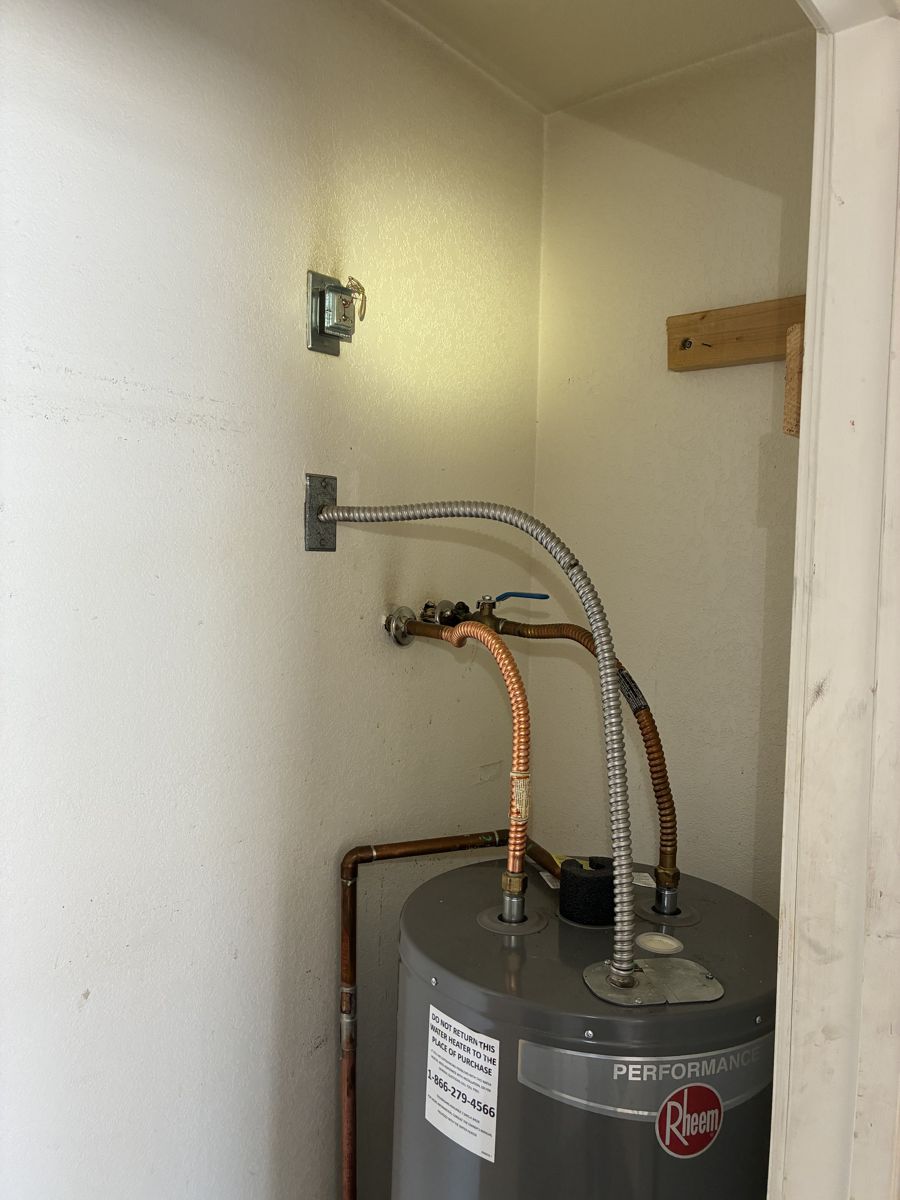 Electric water heater, interior closet install
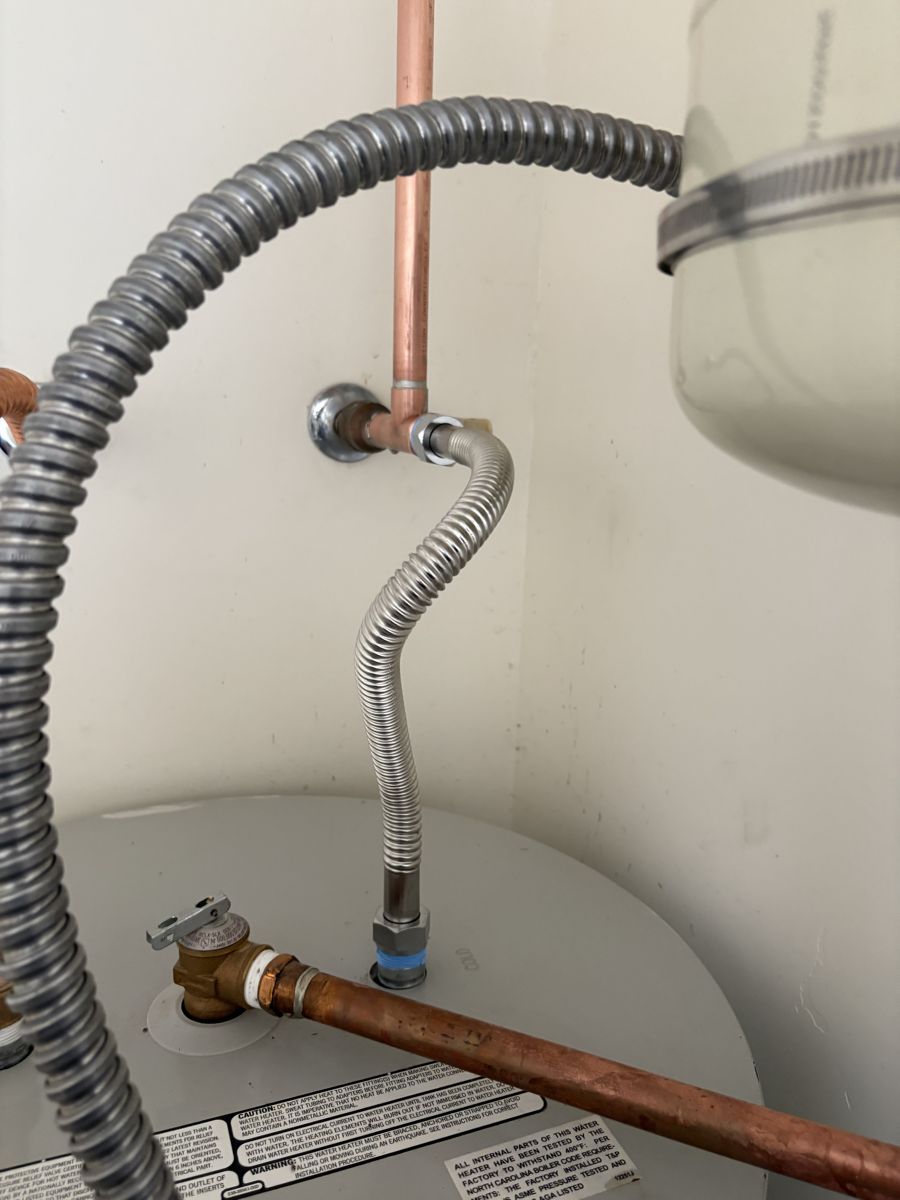 Connections, relief valve, expansion tank
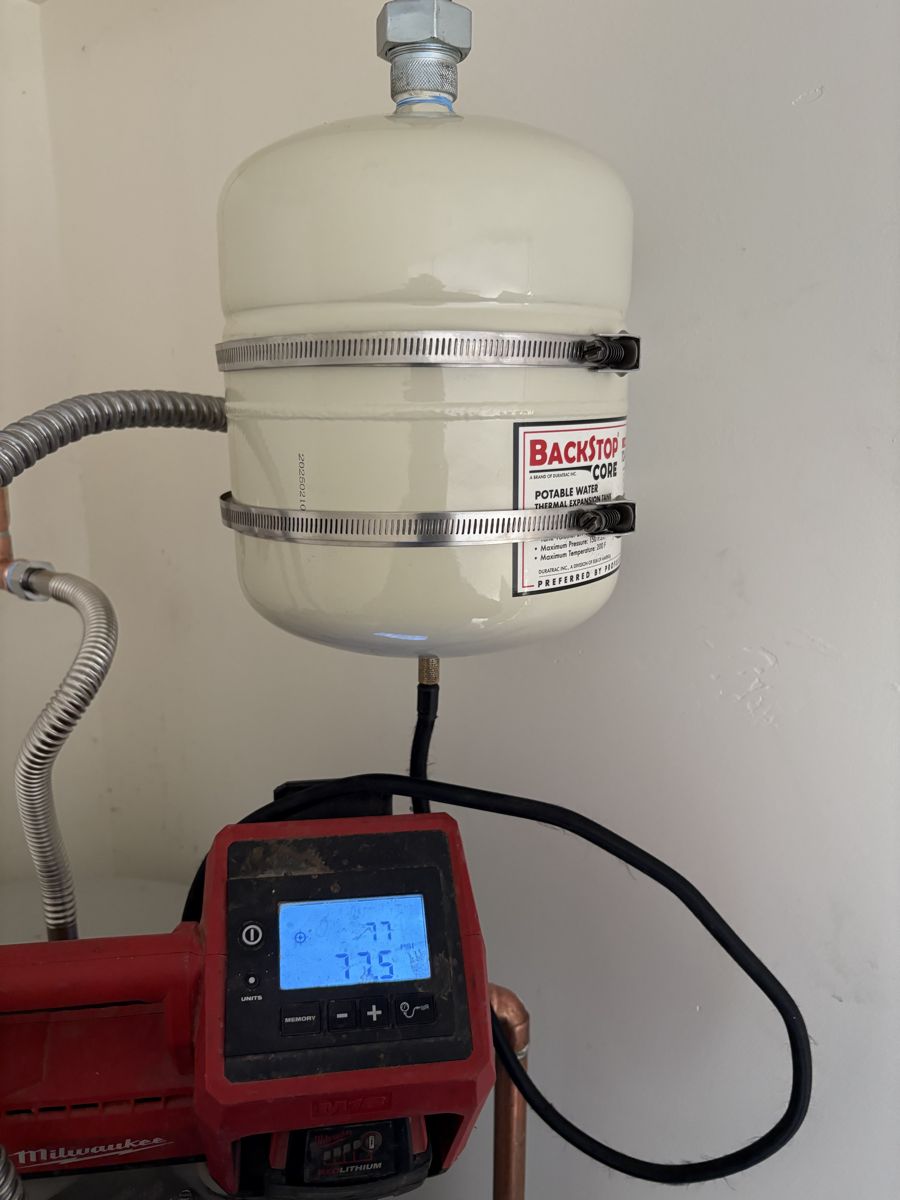 Expansion tank fitted, pressure verified
Water heater replacements across the East Valley
The replacement wave tracks the build wave. Streets that went up together reach the end of their first and second water heaters together, roughly every six to ten years in this water.
Answers, not a brochure.
What size water heater do I need?
Size to simultaneous demand, not to square footage. Two to three people generally fit a 40-gallon unit, three to four fit 50, and households running two morning showers plus a soaking tub go larger or go tankless. Avoid oversizing on reflex: in hard water a bigger tank holds more standing water depositing more scale, and in an unconditioned garage it loses more standby heat all summer.
Why is there an expansion tank on my quote when my old heater didn't have one?
Because your house is probably a closed system and the old install predates the current code. The plumbing code requires thermal expansion control wherever a pressure-reducing valve, check valve, or backflow preventer stops water flowing back to the main. PRVs are common on East Valley homes, so closed systems are common too. Without an expansion tank, heated water has nowhere to expand and the relief valve becomes the pressure release.
Gas or electric for the replacement?
Usually stay with what you have, because switching means either running a gas line and venting or upgrading electrical, and that cost swamps the operating difference. Gas units recover faster, which matters more with a busy morning. Electric units are simpler to install and have no combustion air or venting requirements, which matters in a tight closet.
How long does the installation take?
Half a day for a straightforward garage swap, longer for an attic or closet unit or when code catch-up items turn up once the old tank is out. Draining a 50-gallon tank is itself unhurried. The step nobody should rush is filling and purging air before energizing. An electric element fired in a partly empty tank is destroyed almost immediately, and it’s a warranty argument nobody wants.
Do you haul the old one away?
Yes, and confirm it’s in the quote rather than assumed. A 50-gallon steel tank is heavy, awkward, and not something curbside pickup takes. Disposal is a standard inclusion on our quotes, but it’s exactly the kind of line that separates two that otherwise look identical: ask anyone to name it in the scope.
Does a new water heater need a permit?
It depends on your city. Some East Valley cities exempt a like-for-like tank replacement when an Arizona licensed contractor does it at equal or less BTU and amperage; none exempt a tankless conversion, an upsize, or a homeowner doing the swap. We know which rule applies at your address and the fee, where there is one, is on the written quote.
Often the same visit.
Tell us the gallon size, the fuel, and where it sits. That's a quotable scope over the phone.