
What hydro jetting a main line costs.
More than a snake, and the right answer when you’ve already paid for a snake twice.
Hydro jetting typically runs $800 to $2,500 in the Phoenix metro, with published local pricing starting near $895 for a shorter line and around $1,295 for a main line up to roughly 100 feet. Unlike a cable, jetting scours the pipe wall back toward its original diameter, which is why it lasts longer, and why it’s the wrong tool on a line that’s already compromised.
Range compiled 2026-08-21 from published Phoenix-metro plumbing price guides (plumbingpriceguide.com/phoenix-plumbing-cost, phoenixplumbingauthority.com, desertrainplumbing.com, plumbingphoenixpros.com). Typical installed range for ordinary residential work, not a quote, and not a promise about your house.
What you’re paying the difference for
A cable machine cores a channel through a blockage. Everything coating the pipe wall (grease, soap, mineral scale, root hair) is still there, which is why a snaked line often backs up again on a schedule. Jetting cuts that material off the wall with directed high-pressure water and flushes it. You’re buying diameter back, not just flow, and that’s why the interval before the next problem is measured differently.
When it’s worth it
- Recurring clogs in the same line. If you’ve snaked it twice, the third visit should be a jetter.
- Kitchen grease, which a cable won’t remove.
- Mineral scale: relevant across the valley, because the water deposits rather than dissolves.
- After mechanical root cutting, to clean the joint properly rather than leaving a channel.
When it’s the wrong call, which nobody volunteers
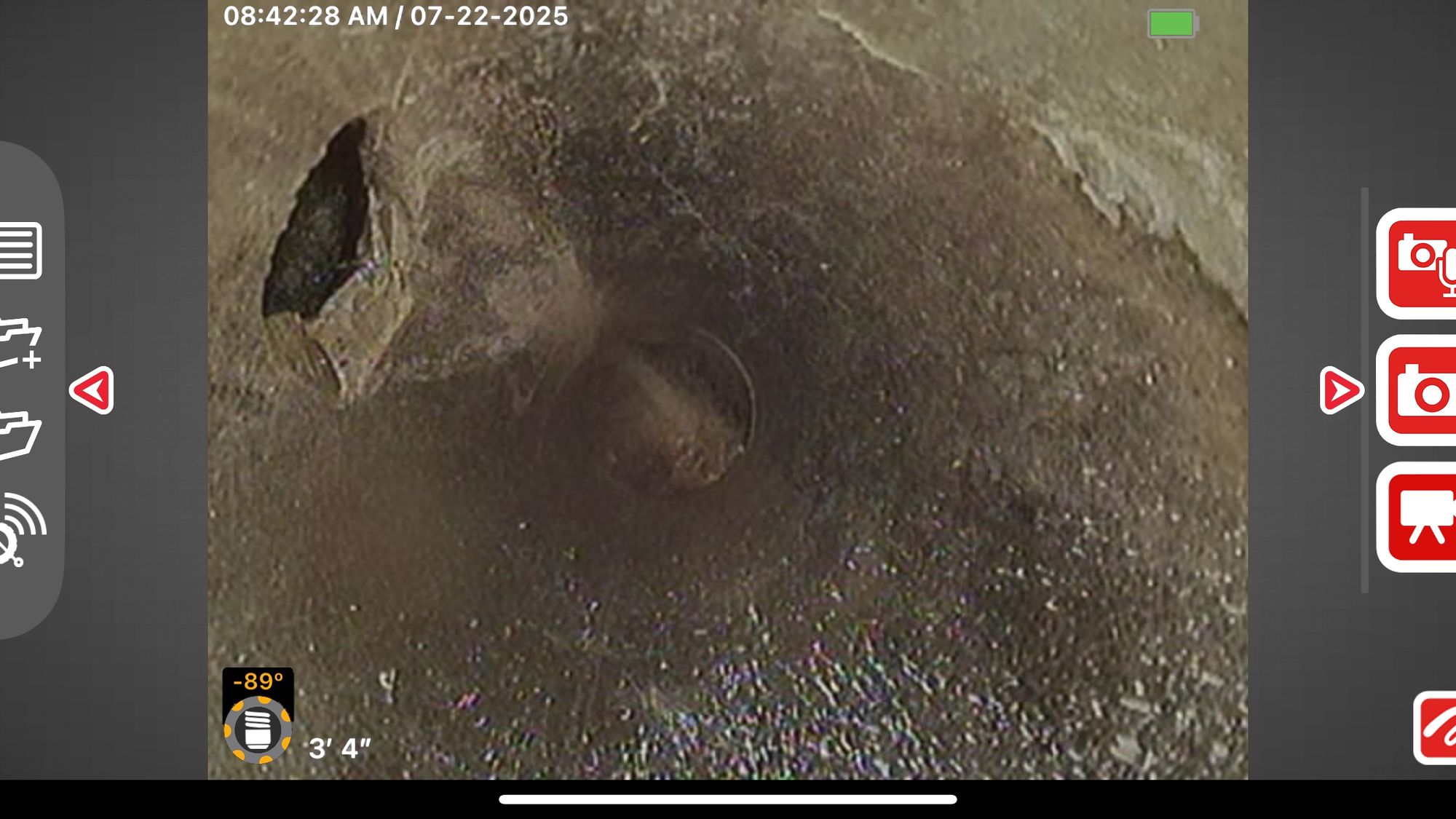
High-pressure water in a line that’s already cracked, badly bellied, or made of deteriorated cast iron or clay can make the damage worse. That’s exactly why a camera inspection belongs first on any older line. Most subdivisions built after 1990 went in on plastic and tolerate jetting fine. The exception is the older pockets of the valley and any line the camera shows as compromised. Camera before jetter is the sequence that keeps a cleaning from becoming an excavation. If someone proposes jetting a main sight-unseen, ask why the camera isn’t first.
The range assumes a reachable cleanout and a line that can take the pressure. Root mass usually needs mechanical cutting first, which is a second operation. A long lateral costs more than a short one. And we’d rather camera an older line first than jet it blind.
Where this page cites a utility, permit or housing figure for a specific town, it’s that town’s published data. Your own city’s water report applies to your tap and your city’s building department sets your permit rules; ask us which apply to your address.
What moves it inside the range.
Length, access, and what the camera found.
Published local pricing tiers on footage. A long lateral out to the street costs more than a short one.
An accessible cleanout is quick. Roof access or a pulled toilet adds real labor.
Grease flushes. Heavy root mass usually needs mechanical cutting first, then jetting. Two operations.
Worth paying for. Footage before tells you jetting is safe. Footage after proves you got what you paid for.
If the camera shows a break or a belly, jetting isn’t the answer and the conversation changes to repair.
Answers, not a brochure.
Can hydro jetting damage my pipes?
Sound, modern pipe handles it. Deteriorated cast iron, old clay, or a line with an existing crack or belly is a different matter, and that’s the whole argument for camera-first on older homes. A contractor who inspects before jetting is protecting you and themselves.
How long does it last?
Longer than snaking, because the pipe wall is actually clean, but it doesn’t fix a defect. If roots are entering through a broken joint, jetting cleans the joint and the roots come back to the same address. Ask what the camera showed before you judge the result.
If you’ve snaked the same line twice, this is the conversation to have.