
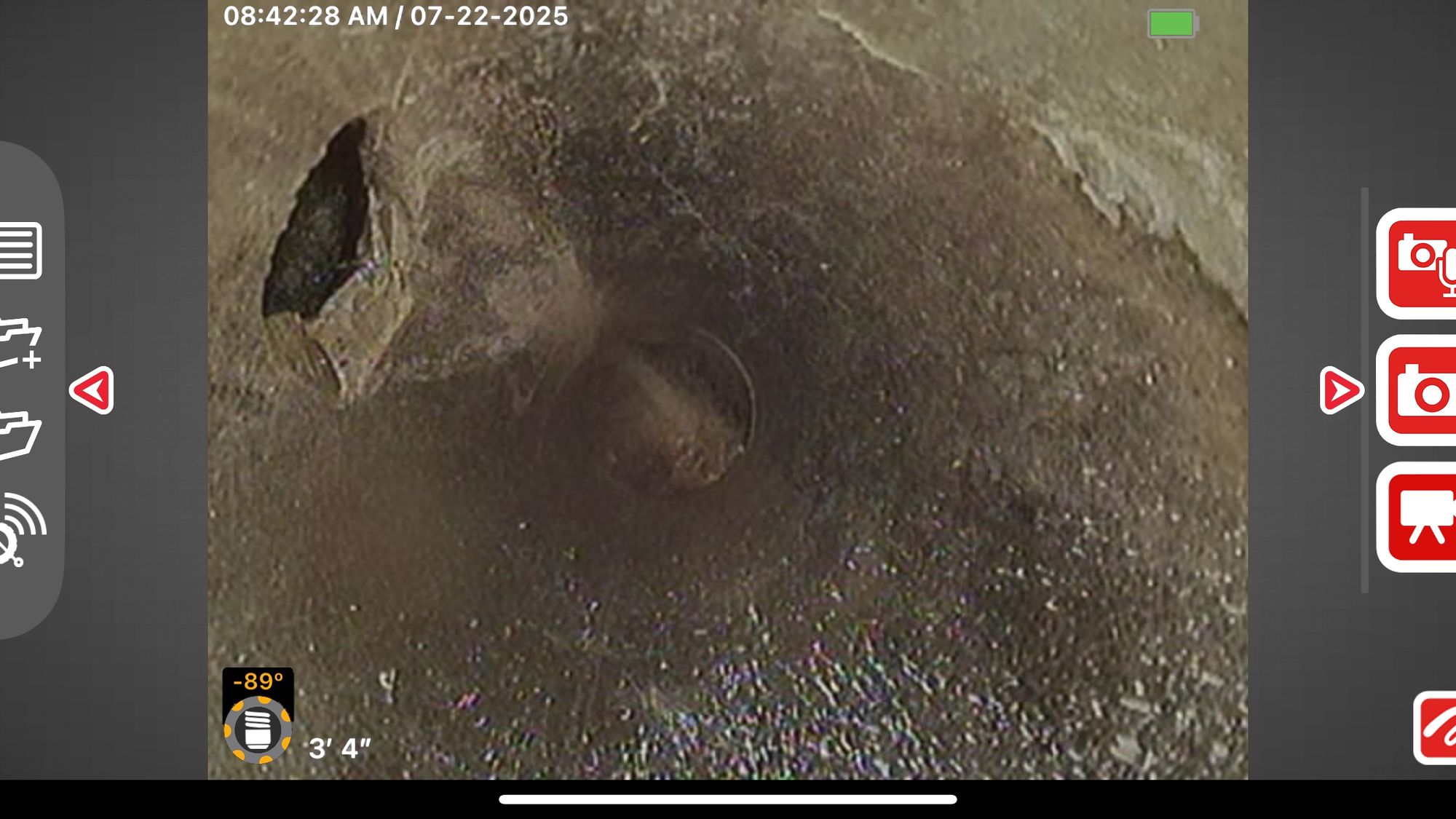
A spot repair and a full lateral aren’t the same number.
Which one you’re looking at is decided by camera footage, not by a description over the phone. Get the pass done before you collect quotes, because it’s the only thing that makes two quotes comparable.
A sewer spot repair in the East Valley, one failed section excavated and replaced, typically runs $1,000 to $4,000, while a full lateral replacement runs roughly $4,000 to $19,000 depending on length, depth, and what’s on the surface above it. Which one you need is decided by camera footage of the whole run, not by the location of the clog, so the camera pass comes first.
What fails, and how you find out
Sewer laterals fail in a small number of predictable ways: a crack or break from ground movement, an offset joint where two sections have shifted apart, a belly where the line sagged and now holds standing water, or root intrusion at a compromised joint. A collapsing clay lateral is on that list only in the oldest pockets of the valley; most subdivisions built after 1990 went in on plastic. Every one of these failures presents identically to a homeowner as a main line that keeps backing up, and every one carries a different price. That’s the whole reason a camera pass costs a few hundred dollars and saves thousands: it converts one symptom into one diagnosis with a depth and a surface mark.
Caliche is why the digging costs money, and it’s not breaking your pipe
Caliche is a cemented calcium carbonate layer common in southern Arizona soils (University of Arizona Cooperative Extension, publication az1281). It doesn’t damage pipe, and anyone telling you it does is reaching. What it does is roughly double the cost of getting to the pipe: commercially documented Phoenix-area figures put a sewer spot repair at about $1,500 to $3,500 where there’s no caliche against $3,000 to $6,000 through it. Same repair, same pipe, different ground. Add whatever sits on the surface, a paver driveway or fifteen years of established landscaping, and restoration can rival the plumbing. That combination is why trenchless is common here rather than exotic.
Trenchless, honestly
Pipe bursting pulls a new line through the path of the old one, fracturing the old pipe outward. Cured-in-place lining installs a resin liner inside the existing pipe and cures it in place. Both need only entry and exit pits instead of a continuous trench, which is what saves your driveway and your landscaping. Both cost more per foot than open trenching. Neither is universally applicable: lining needs a host pipe intact enough to line, and bursting needs a path and enough clearance from other utilities. A contractor who offers only one method will find that one method is what you need. Ask what the camera showed and why this method fits it.
The property line, the permit, and the dig
The lateral from your house to the city’s connection is yours; the city’s obligation is on its side of that connection. Sewer replacement needs a permit in every East Valley city, and we pull it. Before we excavate, we call Arizona 811, because gas, power and communications share that yard. Southwest Gas emergency is (877) 860-6020 if a line is ever struck.
Where this page cites a utility, permit or housing figure for a specific town, it’s that town’s published data. Your own city’s water report applies to your tap and your city’s building department sets your permit rules; ask us which apply to your address.
What a failing lateral looks like from inside the house
Two or more main line clogs in a year is a condition. Snaking it a third time is paying to postpone the diagnosis.
A main line restriction fills the system from the bottom. Ground-floor showers and floor drains go first.
Wastewater escaping through a break waters that spot and nothing else, even in a dry Arizona summer.
Gas escaping through a break in the lateral surfaces before liquid does. Worth investigating rather than living with.
The cable hitting the same obstruction at the same distance every time is describing a fixed defect, not a clog.
Water escaping underground carries soil with it, and the surface eventually follows the void down.
What sewer repair runs in the East Valley
This is the widest range on the site and it’s honest. Length, depth, soil, method, and surface restoration each move the number by thousands, which is exactly why nobody can price it without camera footage.
Compiled 2026-08-21 from published Phoenix-metro price guides (plumbingpriceguide.com/phoenix-plumbing-cost, phoenixplumbingauthority.com, desertrainplumbing.com, plumbingphoenixpros.com), which carry a local figure for this job. Those guides put a sewer spot repair at $1,000–$4,000 and a full lateral replacement at $4,000–$19,000 for the Phoenix metro, with trenchless bursting or lining at the upper end. The caliche row instead uses a commercially documented Phoenix differential: roughly $1,500–$3,500 for a spot repair without caliche against $3,000–$6,000 through it. These are metro-wide planning guides, not a quote: only the plumber standing in your house can give you one.
The diagnostic fee comes off the repair. We charge a service call to come out and diagnose the problem. If you approve the work, that fee is credited against it in full. You hear the fee on the phone before anyone drives, and it’s the same number at every location.
How we scope and run a sewer repair
We camera it first, always
We run and record the full lateral, then locate the defects and mark them on the surface with a stated depth. We don’t quote before that.
We choose the method against the footage
Spot repair, open trench, bursting, or lining. We tell you why the method we picked fits what the camera showed.
We call Blue Stake and pull the permits
We call Arizona 811 before we excavate, and we pull the permit your city requires.
We repair, test, backfill, and restore
We install the new pipe and test it for flow and grade, backfill the trench in compacted lifts so it doesn’t settle, then restore the surface to whatever the contract says.
What this job looks like when we do it.
Not stock, not a rendering, and nothing generated. Every photograph on this site is an actual plumbing job in an actual house.
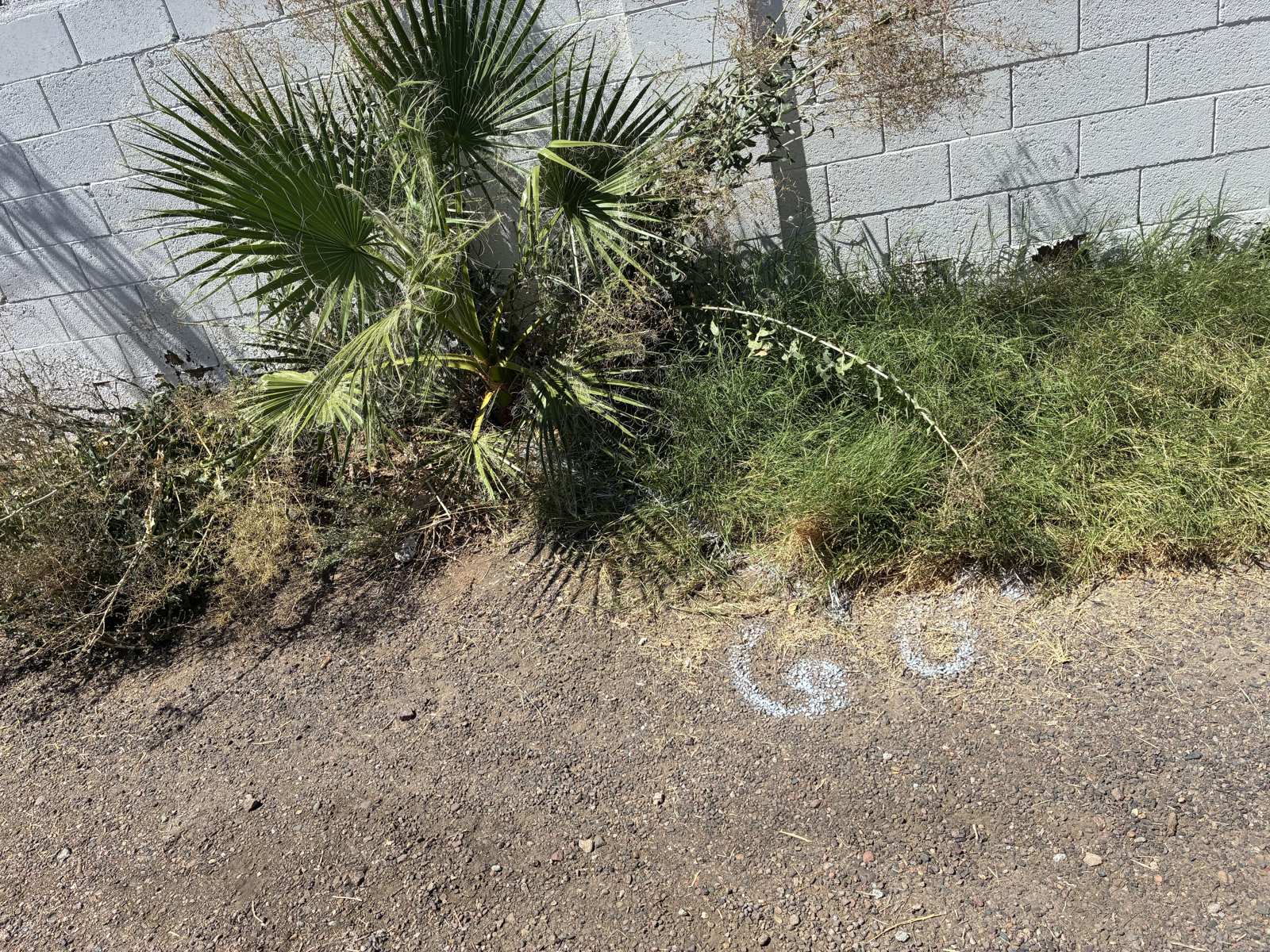 Locate marks: where the line runs and how deep
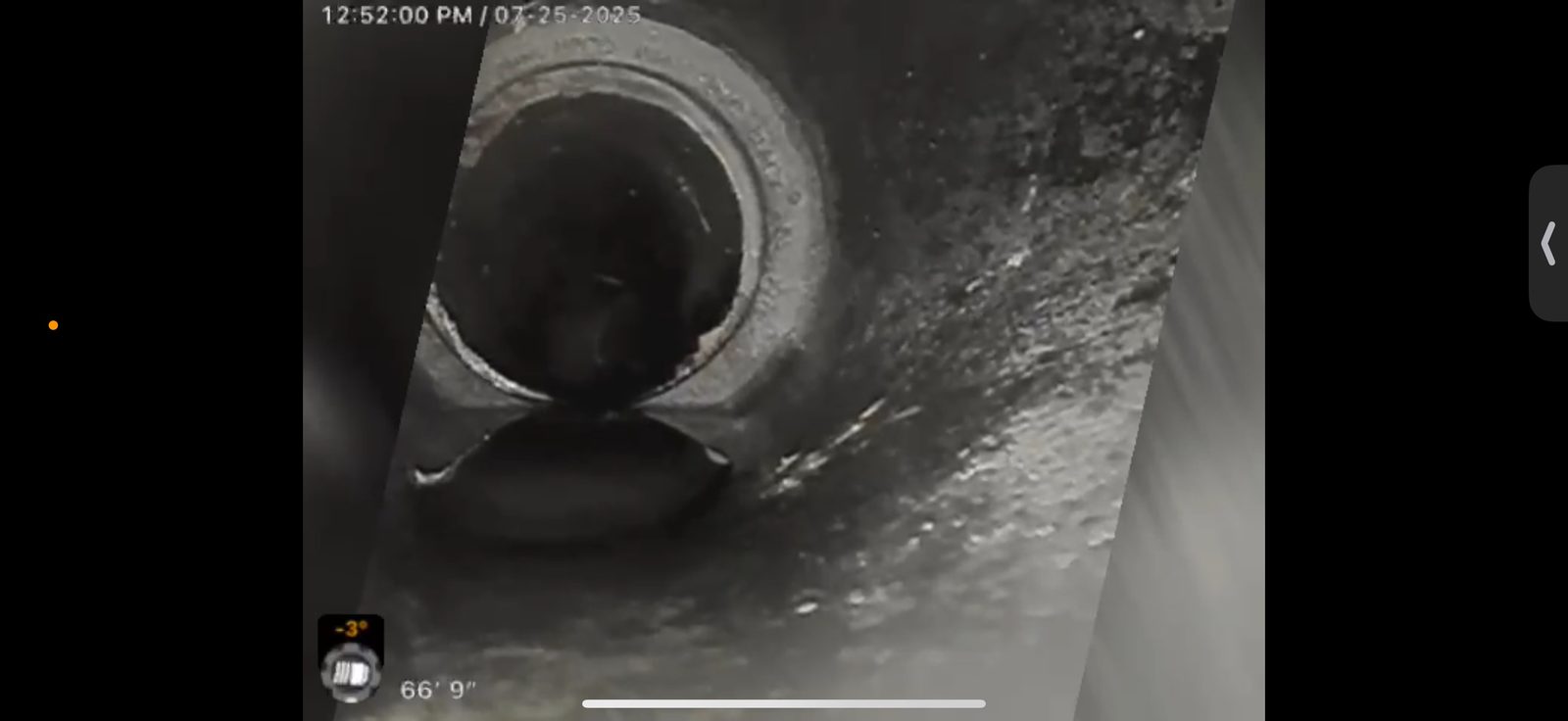 Camera in the lateral, 66 ft 9 in
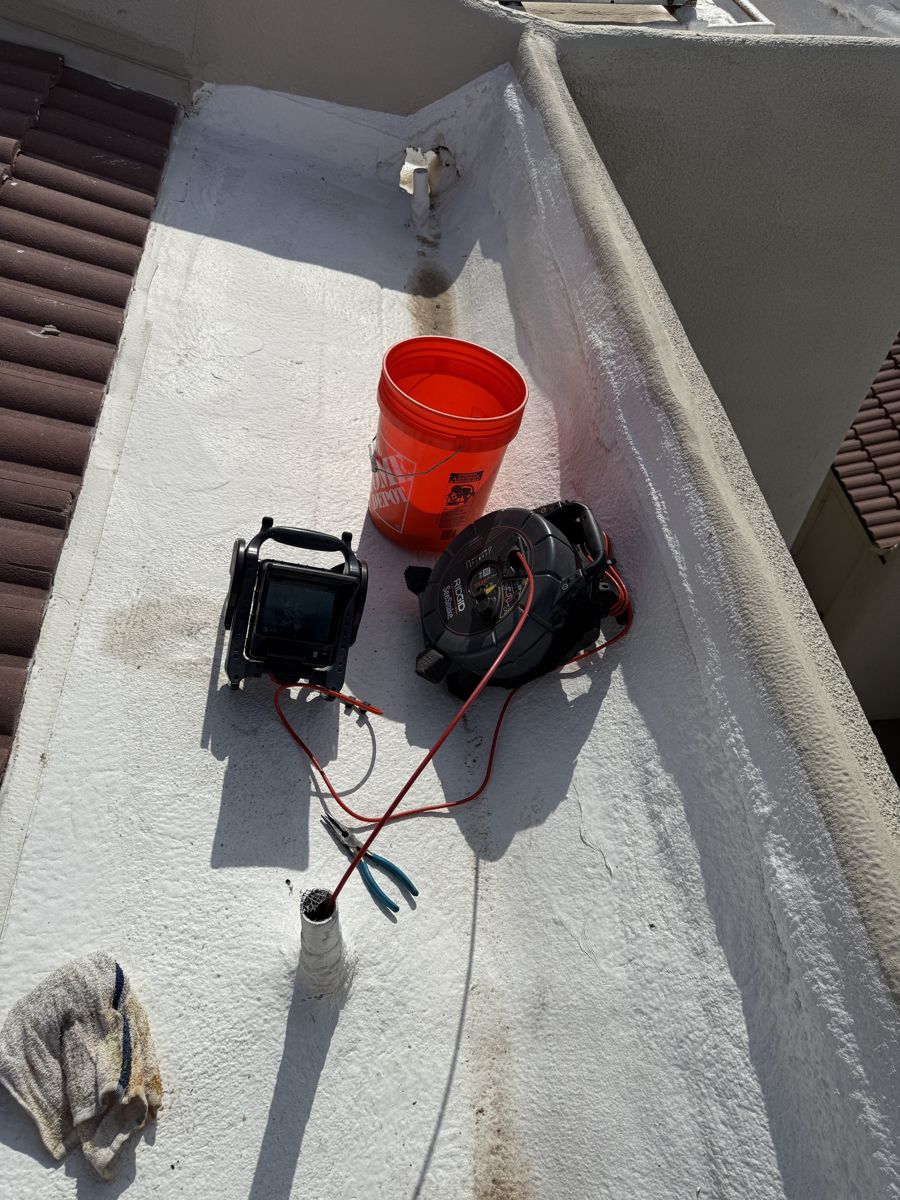 No cleanout: going in through the roof vent
Sewer laterals by vintage
Age-related lateral failure concentrates in the older parts of the valley. In the newer subdivisions the usual finding is a bedding or workmanship defect rather than a worn-out pipe.
Answers, not a brochure.
How do I know if I need a spot repair or a full sewer replacement?
Camera footage of the entire lateral, not just the defect. One break or one offset joint in an otherwise sound line is a spot repair costing $1,000 to $4,000. Multiple defects distributed along the run, a significant belly, or pipe material that has deteriorated along its length is a replacement. Ask to see the whole run rather than the clip of the worst spot. The condition of the other ninety feet is what decides the scope and therefore the number.
Is trenchless sewer repair worth the extra cost?
It depends on what’s above the pipe. If the lateral runs under plain dirt or turf, open trenching is cheaper and the yard recovers. If it runs under a paver driveway, stamped concrete, or fifteen years of established desert landscaping, the restoration cost of trenching through it can exceed the price difference by itself. Caliche makes the argument stronger, because hardpan excavation is expensive per foot and trenchless needs far fewer feet of it.
Who is responsible for the sewer line, me or the city?
The lateral from your house to the city’s connection is the property owner’s responsibility. The city’s obligation is on its side of that connection. This is the same boundary logic as the water service line, and it’s the most expensive thing to misunderstand about a sewer failure, because it determines whether you’re waiting for a municipal crew that’s not coming. Your city’s public works department can confirm the boundary for your address.
Why is sewer work more expensive in Arizona?
Caliche, mostly: a cemented calcium carbonate layer common in southern Arizona soils, documented in University of Arizona Cooperative Extension publication az1281. It doesn’t damage pipe. It makes reaching pipe expensive, needing hydraulic breakers rather than a normal excavator. Phoenix-area figures put a sewer spot repair at roughly $1,500 to $3,500 without caliche against $3,000 to $6,000 through it. Add slab construction with no basement and both digging and its alternatives cost more here.
Will my homeowners insurance cover a sewer line replacement?
Standard policies commonly exclude the failure of an underground pipe from normal wear, root intrusion, or age, and commonly cover sudden accidental damage and some resulting damage. Some carriers sell a service line endorsement specifically for this, often for a modest annual premium, and many homeowners have one without knowing. Read your policy, or ask your agent about a service line endorsement before you need it rather than after.
Can I just keep snaking it?
You can, and for a defect being managed on a known schedule that’s a legitimate strategy while you save for the repair. What it’s not is a fix, and there’s a real risk attached: a lateral that keeps backing up is also a lateral that can fail completely, and a full failure happens on its schedule rather than yours. Get the camera pass so at least you’re choosing to postpone a known problem instead of hoping about an unknown one.
Get the camera pass before you collect quotes. It's what makes two numbers comparable.