
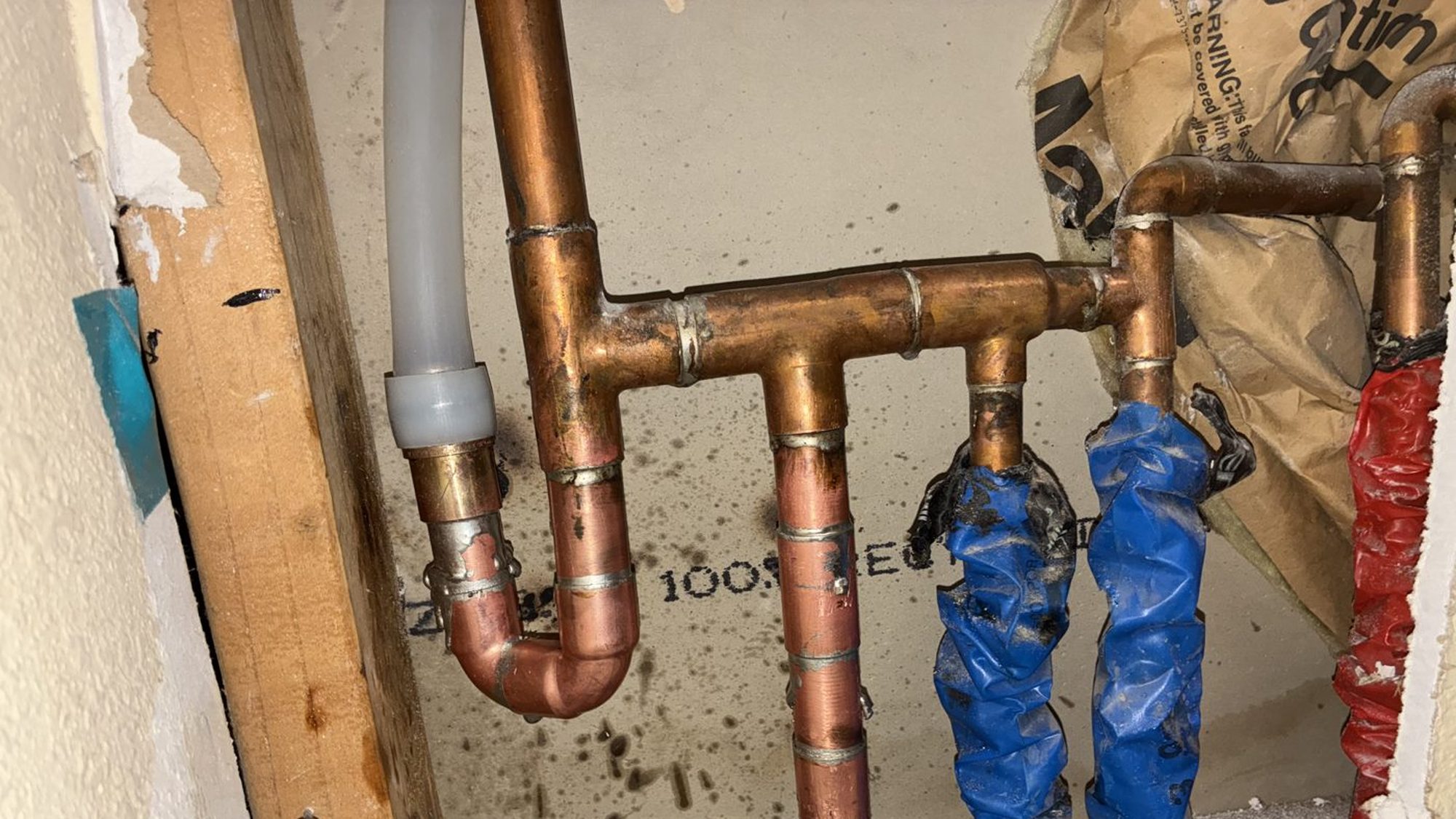
Slab leak repair in the East Valley, without the exploratory demolition.
A slab leak is a supply line failing under your foundation. We find it with instruments before anything gets opened, and in most East Valley houses the fix goes around the slab rather than through it.
A slab leak is a pressurized water line leaking under your foundation. We locate it with acoustic and thermal instruments before we touch any concrete. Where the house sits on a post-tension slab, the repair reroutes a new line overhead rather than breaking concrete, because that slab’s steel cable must not be cut. Post-tension foundations are routine in East Valley homes built since the mid-1980s.
Why the line under the slab gives out
Hard water deposits scale inside copper. Scale narrows the bore, raises velocity at the same flow, and velocity is what erodes copper from the inside at elbows and turns. After two or three decades of that, the under-slab copper in an older house is working harder than the same pipe in a soft-water city. That’s the mechanism behind most slab leaks here: not a chemical attack on the whole system, but accelerated wear at the places the water has to change direction.
The foundation changes the repair, not the leak
A slab-on-grade house has no basement and no crawl space, which removes the routing path most of the country takes for granted. That doesn’t mean every pipe in your house is under concrete: supply lines can and often do run through walls and the attic. Drain and waste lines are the ones that have to sit below the slab, because they need gravity slope. Where a supply line was run under the slab and then fails, the foundation type decides the fix. Post-tension slabs, where steel cable runs through the concrete under load, are routine in East Valley homes built from the mid-1980s onward. Cutting one of those cables is dangerous and structurally serious, so the standard approach becomes an overhead reroute: abandon the failed run and pull a new line through the attic and down the wall. On a conventional rebar slab, opening the floor stays on the table and is sometimes the better answer.
Finding it before opening anything
Detection is its own job with its own price. We isolate the leak with pressure testing, then narrow it with acoustic listening equipment, thermal imaging, and sometimes tracer gas. The point of paying for that step is that it converts an unknown into a fixed scope. A quote given before the locate is a quote on a guess, and it will either be padded or it will change once someone starts cutting.
The permit, and the bill
A slab leak repair or reroute isn’t on any East Valley city’s permit-exempt list that we know of, and we won’t tell you it’s exempt before we’ve seen it. We pull what your city requires and it goes on the written quote. Separately, call your water utility about the bill. A slab leak can run thousands of gallons into the ground before anyone notices, the meter counted every one of them, and most utilities have a leak-adjustment process that wants the repair invoice.
Where this page cites a utility, permit or housing figure for a specific town, it’s that town’s published data. Your own city’s water report applies to your tap and your city’s building department sets your permit rules; ask us which apply to your address.
Six things a slab leak does before you see any water
A hot-line leak heats the concrete above it, so one stretch of tile reads noticeably warmer underfoot.
Same household, same habits, materially higher usage. Compare the gallons, not the dollars.
Shut every fixture, then listen at a quiet wall or watch the meter's low-flow indicator for movement.
A leaking hot line bleeds pressure and heat continuously, so recovery gets slower across the whole house.
Moisture under the slab moves grout, lifts wood, and pops tile in a localized area rather than a whole room.
Water finds the path of least resistance and often surfaces at the base of a wall long before it reaches open floor.
What slab leak work runs in the East Valley
Detection and repair are priced separately, and the repair method drives almost all of the spread. The overhead reroute that most East Valley houses get sits in the middle of this range, not at the top.
Compiled 2026-08-21 from published Phoenix-metro price guides (plumbingpriceguide.com/phoenix-plumbing-cost, phoenixplumbingauthority.com, desertrainplumbing.com, plumbingphoenixpros.com), which carry a local figure for this job. Detection lands at $250–$700 and repair at $1,500–$7,500 across those guides, with the spread driven by whether the fix is an overhead reroute or concrete comes out. These are metro-wide planning guides, not a quote: only the plumber standing in your house can give you one.
The diagnostic fee comes off the repair. We charge a service call to come out and diagnose the problem. If you approve the work, that fee is credited against it in full. You hear the fee on the phone before anyone drives, and it’s the same number at every location.
What actually happens, in order
We confirm it’s a leak at all
We start at the meter: everything in the house off, then we watch the low-flow dial. A moving dial with no fixture running means water is leaving the system somewhere.
We isolate hot from cold
We shut and pressure-test each side separately. Which side holds pressure tells us half the answer before any equipment comes off the truck.
We locate the leak
Acoustic listening and thermal imaging narrow it down, and tracer gas settles it when those two disagree. We finish that step with a marked spot on your floor, which is what decides the scope and therefore the price.
We repair by the method your foundation allows
A post-tension slab means an overhead reroute in almost every case. A conventional rebar slab keeps the slab-break option open. We pressure-test the new run before we close anything up.
What this job looks like when we do it.
Not stock, not a rendering, and nothing generated. Every photograph on this site is an actual plumbing job in an actual house.
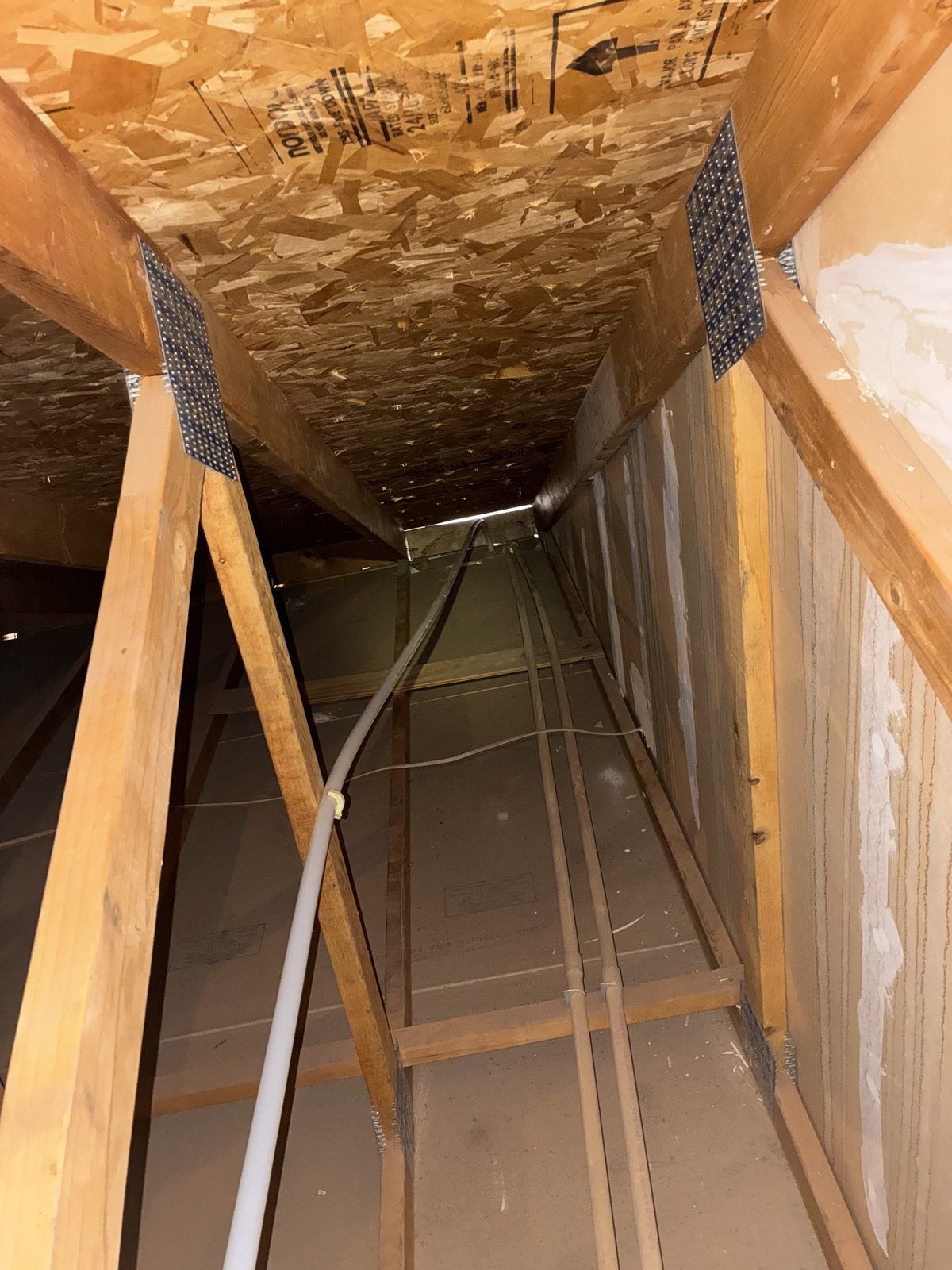 PEX rerouted overhead through the attic
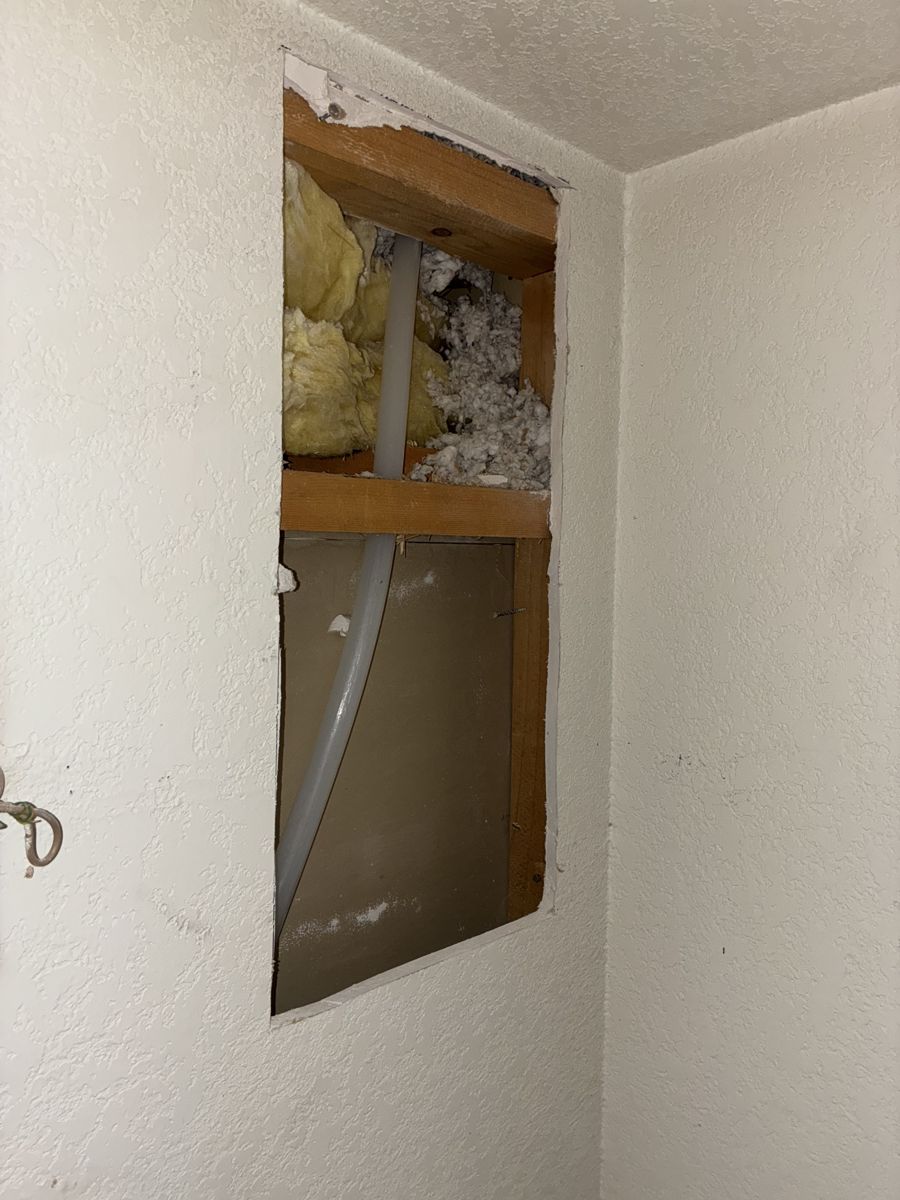 The drop from the attic into the wall
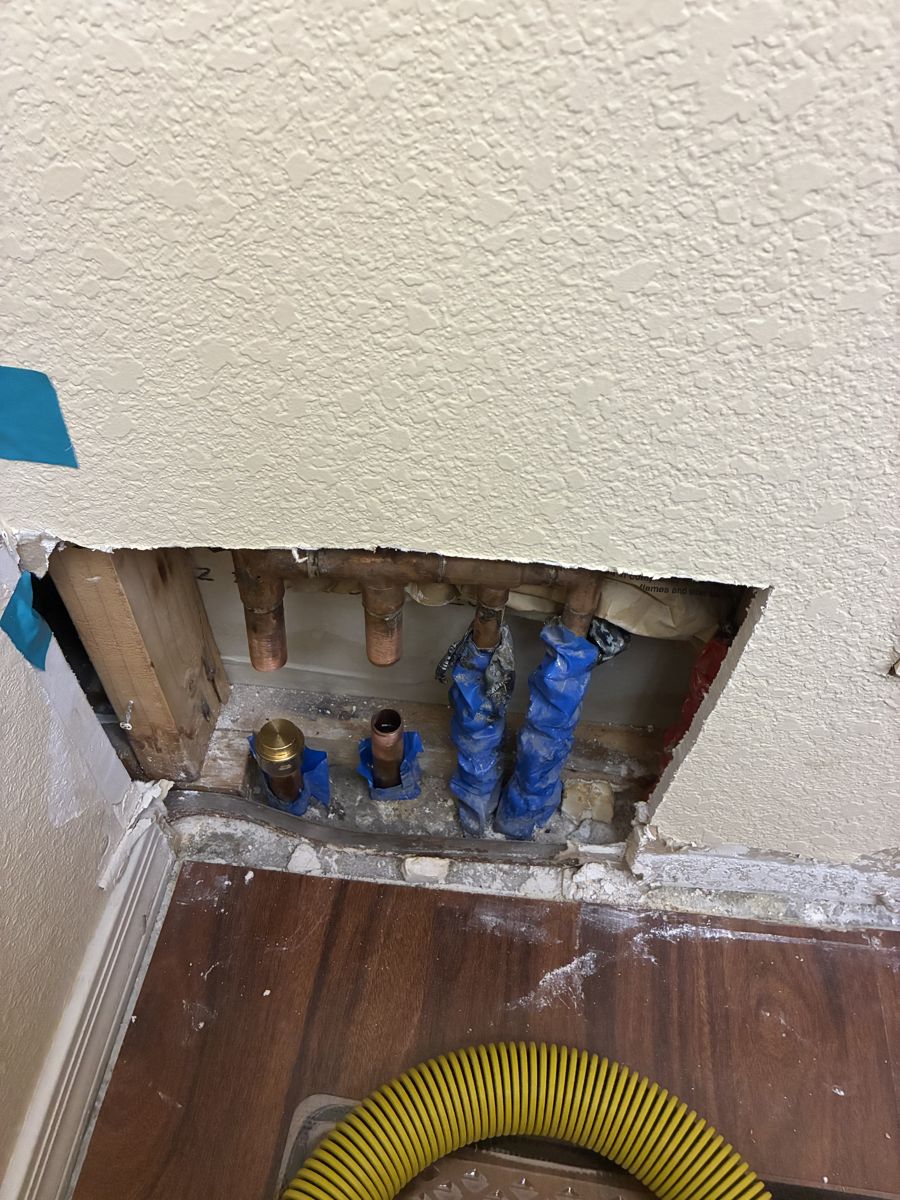 Wall opened, stubs capped, cavity drying
Where slab leaks show up first
Under-slab copper fails by age. The older parts of the valley, Scottsdale and Ahwatukee especially, have had scale-forming water running through their supply lines the longest, so that’s where these calls cluster.
Answers, not a brochure.
How do I know if I have a slab leak or just a high water bill?
Run the meter test. Turn off every fixture and appliance that uses water, then watch the low-flow indicator on your water meter for fifteen minutes. If it moves, water is leaving the system with nothing turned on. That narrows it to a leak somewhere between the meter and your fixtures, and a slab leak is one of the few that leaves no visible water. Your water utility can pull the usage history on the bill.
Can a slab leak be repaired without breaking the concrete?
Usually, yes. The standard method here is an overhead reroute: the failed under-slab run is abandoned in place and a new line is pulled through the attic and down the wall to the fixture. This is preferred on the post-tension slabs common in homes built from the mid-1980s onward, because the steel cable inside those slabs can’t be safely cut. Homes on older conventional rebar slabs still have the slab-break option, and for a single leak under an unfinished area it can be the cleaner fix.
Does homeowners insurance cover a slab leak in Arizona?
Policies commonly cover the resulting water damage and the cost of accessing the pipe, and commonly exclude the failed pipe itself. That split is the whole argument, so read your policy's water damage section before you call the carrier, and photograph everything before any repair starts. We separate access, repair, and restoration into distinct lines on the invoice, because your adjuster treats them differently.
Why does hard water cause pipe problems if it’s safe to drink?
Because those are two different questions. Hard water isn’t a health problem. What hardness does is deposit scale, and scale narrows pipe, raises water velocity, and velocity erodes copper at bends over decades. It’s an appliance and plumbing problem, not a health one.
How long can I wait before fixing a slab leak?
Not long, and the reason isn’t the pipe. Water running under a slab moves soil, and moving soil under a foundation is a structural conversation instead of a plumbing one. It also runs the meter continuously, so the bill compounds daily. If the leak is confirmed and you need time to arrange the repair, ask us whether we can isolate the affected line and shut it off at the fixture so the leak stops while you decide.
Should I repipe instead of repairing one leak?
One leak is a repair. Three leaks in about a year and a half is a pattern, and at that point the money argument shifts toward a whole-home repipe because you’re paying detection and access costs over and over on a system that keeps failing. Ask us what the pipe looked like where we cut it. Pinholes on a wall thin enough to see light through are telling you something a single repair won’t fix.
Tell us where the warm spot is and roughly when the house was built. That's most of the diagnosis.