
What repiping an East Valley house costs.
The largest number on this site, and the one where a second quote is most worth the delay.
A whole-home PEX repipe of a roughly 2,000 square foot single-story slab home typically runs $5,000 to $15,000 in the Phoenix metro. That covers new supply lines, permits, drywall patching, and fixture reconnection under ordinary access. It doesn’t cover paint, texture matching, or extensive finish restoration, and on a two-story or larger home the range moves up.
Range compiled 2026-08-21 from published Phoenix-metro plumbing price guides (plumbingpriceguide.com/phoenix-plumbing-cost, phoenixplumbingauthority.com, desertrainplumbing.com, plumbingphoenixpros.com). Typical installed range for ordinary residential work, not a quote, and not a promise about your house.
When a repipe is actually the right answer
Not on a first leak. One failure in otherwise sound pipe is a repair, and a contractor who jumps to a whole-house number on a single slab leak should be asked to explain what rules out the spot repair. Where a repipe genuinely wins is the second or third leak in the same system: aging pipe that has failed twice is telling you about the next two years, and paying $3,000 repeatedly to postpone a $8,000 job is a bad trade you make one leak at a time.
What "repipe" does and doesn’t include
It replaces the pressurized supply lines. It doesn’t touch your drain, waste, or vent piping, and it doesn’t touch the sewer lateral. Those are separate systems with separate problems. Homeowners are sometimes surprised by this after the fact, so ask the question explicitly: is the drain side included, and if not, has anyone looked at it.
Why they usually go overhead
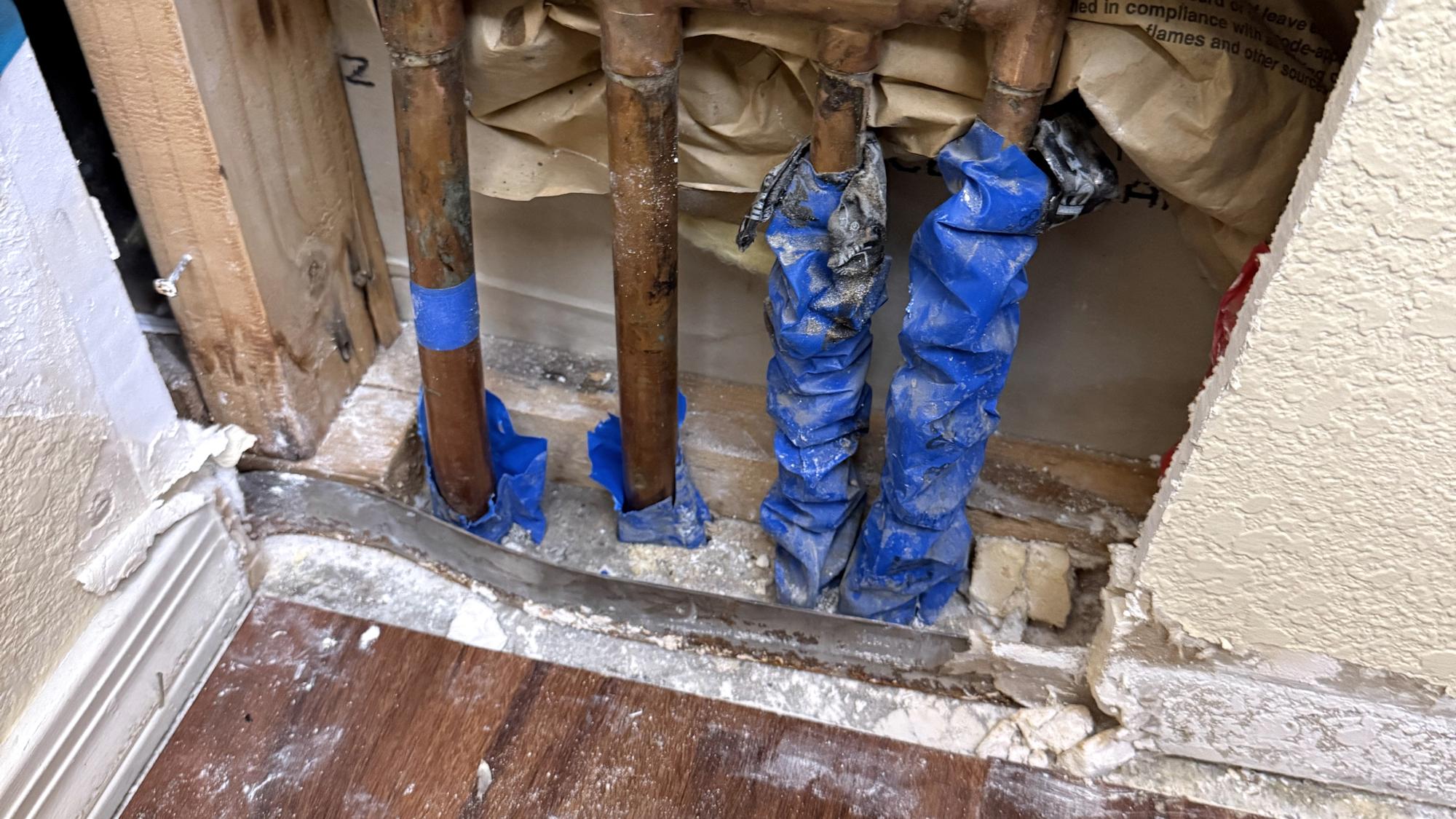
In a slab-on-grade East Valley house, a repipe typically abandons the under-slab lines and runs new PEX through walls and the attic. That’s not a shortcut. It puts the plumbing somewhere a future leak is visible and reachable instead of under four inches of concrete. It means opened drywall at fixture locations, which is why patching is part of the quote and why texture and paint usually aren’t.
Get two quotes on this one
This is the job with the widest legitimate spread between contractors, because access assumptions and restoration scope differ. Ask the second contractor to look without telling them the first number, and compare what each one includes rather than the totals. A lower bid that excludes patching isn’t lower.
The range covers new supply lines, permits, and patching the drywall we open. It doesn’t cover texture matching or paint, which most people hire out separately. Two stories, difficult attic access, or more bathrooms all push it up. The drain side is a different system and a different conversation.
Where this page cites a utility, permit or housing figure for a specific town, it’s that town’s published data. Your own city’s water report applies to your tap and your city’s building department sets your permit rules; ask us which apply to your address.
What moves it inside the range.
Size, stories, access, and how much of your wall has to come out.
The main driver. Two-story homes need vertical runs and more opened wall.
Every fixture is a termination, and terminations are labor.
Attic clearance, wall construction, and whether the ceiling is open or vaulted decide how fast the runs go in.
Whether patching, texture, and paint are in or out. This single line explains most quote-to-quote differences.
Repiping while walls are already open is dramatically cheaper. If a remodel is coming, sequence it.
Answers, not a brochure.
How long does a repipe take?
A typical single-story home is usually a few days for the plumbing, plus patching. You’re generally without water for parts of it rather than all of it: ask us to walk you through the daily schedule so you can plan around the shut-offs.
PEX or copper?
PEX is the Phoenix-metro standard for repipes now: cheaper, faster to install, fewer joints in inaccessible places, and it tolerates scale-forming water without the pinhole failure mode copper has. Copper is still available and costs more. Most East Valley repipes are PEX for good reasons rather than cheap ones.
Does it include my sewer line?
No. A repipe is the supply side. Drain, waste, vent, and the sewer lateral are separate systems. If your drains are also giving you trouble, that’s a camera inspection and a separate conversation: ask before the quote, not after.
What the job involves.
The one job on this site where a second quote nearly always pays for the delay.