
Tankless is a good unit and an expensive conversion. Both are true.
The unit is a fraction of the number. Gas line upsizing, new venting, and a condensate path are what separate a $2,500 like-for-like swap from a $6,500 first-time conversion in an East Valley garage.
A gas tankless water heater installed in the East Valley typically runs $2,500 to $6,500, and the spread is almost entirely conversion work rather than the unit: a larger gas line, new sealed venting, and a condensate drain. In this water a tankless unit needs an annual descale to hold its rated output, because the scale that settles in a tank instead plates directly onto the heat exchanger.
Why the install costs more than the unit
A storage tank sips gas slowly and holds the result. A tankless unit produces the same hot water on demand, which means a much higher instantaneous BTU draw: often two to four times the tank it replaced. That frequently requires a larger gas supply line back toward the meter, and sometimes a look at whether the meter itself has capacity. It also requires its own sealed venting, because a condensing tankless unit doesn’t share a conventional flue. Add a condensate drain and isolation valves and you have three trades’ worth of work attached to a box the size of a carry-on. That’s why a like-for-like swap lands near the bottom of the range and a first-time conversion near the top.
What hard water does to a heat exchanger
In a storage tank, scale falls to the bottom where it’s annoying. In a tankless unit the water is heated as it passes through a narrow copper or stainless heat exchanger, and the scale plates directly onto the surface doing the heating. Untreated, that shows up as reduced flow at temperature, then error codes, then a warranty conversation. Descaling with a circulation pump and a mild acid solution once a year isn’t optional maintenance in the valley. Ask what it costs before you buy the unit, and ask whether the installer is putting service isolation valves on so it can be done at all. Softened water slows heat exchanger scaling dramatically, which is why many manufacturers’ warranties reference water hardness limits; if you’re considering both, do the softener first.
Where a tank is still the right answer
If you aren’t staying in the house long, the payback doesn’t arrive. If your gas service can’t carry the load without a meter upgrade, the conversion cost jumps again. And if nobody in the household will book an annual descale, a tankless unit in this water will disappoint you in year four.
Tankless always needs a permit
No East Valley city exempts a tankless installation from permit, even where a like-for-like tank swap is exempt. It’s permitted, inspected gas work under the International Fuel Gas Code, and we pull it; the fee is on the written quote. Permits also expire after a period without inspection, so a stalled project is a thing to watch.
Where this page cites a utility, permit or housing figure for a specific town, it’s that town’s published data. Your own city’s water report applies to your tap and your city’s building department sets your permit rules; ask us which apply to your address.
When a tankless conversion actually makes sense
Multiple simultaneous showers or a large soaking tub. This is the problem tankless genuinely solves better than a bigger tank.
A tankless unit is wall-mounted and small. Reclaiming the footprint of a 50-gallon tank is a real benefit in a two-car garage.
The efficiency and lifespan argument needs time to work. Under that horizon, the math rarely closes.
Softened water is the single best thing you can do for a tankless heat exchanger in this water.
Honest self-assessment. In hard water this is the maintenance the unit's rated life assumes.
What tankless runs in the East Valley
Two very different numbers hide in this range. Replacing an existing tankless unit sits near the bottom. Converting from a tank for the first time carries the gas, venting, condensate, and permit work that makes up the difference.
Compiled 2026-08-21 from published Phoenix-metro price guides (plumbingpriceguide.com/phoenix-plumbing-cost, phoenixplumbingauthority.com, desertrainplumbing.com, plumbingphoenixpros.com), which carry a local figure for this job. Those guides put a gas tankless installation at $2,500–$6,500 for the Phoenix metro. Angi's Phoenix tankless page gives a local average near $2,882 with most jobs between roughly $1,579 and $4,000, which doesn’t isolate a first-time conversion needing both a gas upsize and new venting. The reason the top of this range sits higher. The descale figure is the least well-sourced number here. These are metro-wide planning guides, not a quote: only the plumber standing in your house can give you one.
The diagnostic fee comes off the repair. We charge a service call to come out and diagnose the problem. If you approve the work, that fee is credited against it in full. You hear the fee on the phone before anyone drives, and it’s the same number at every location.
What the conversion involves
We calculate load and gas capacity
Your household demand sets the unit size, the unit size sets the BTU draw, and the BTU draw decides whether your existing gas line and meter can carry it.
We plan the venting
A condensing tankless unit needs its own sealed vent path to an exterior wall or roof. That’s usually what decides where on the wall we put the unit.
We make four connections, not one
Gas, water, venting, condensate. We put isolation valves on the hot and cold at the unit so the annual descale can be done without draining the house.
We commission it and present it for inspection
We fire the unit, verify gas pressure under load, confirm temperature at the fixtures, and present the gas work for inspection.
What this job looks like when we do it.
Not stock, not a rendering, and nothing generated. Every photograph on this site is an actual plumbing job in an actual house.
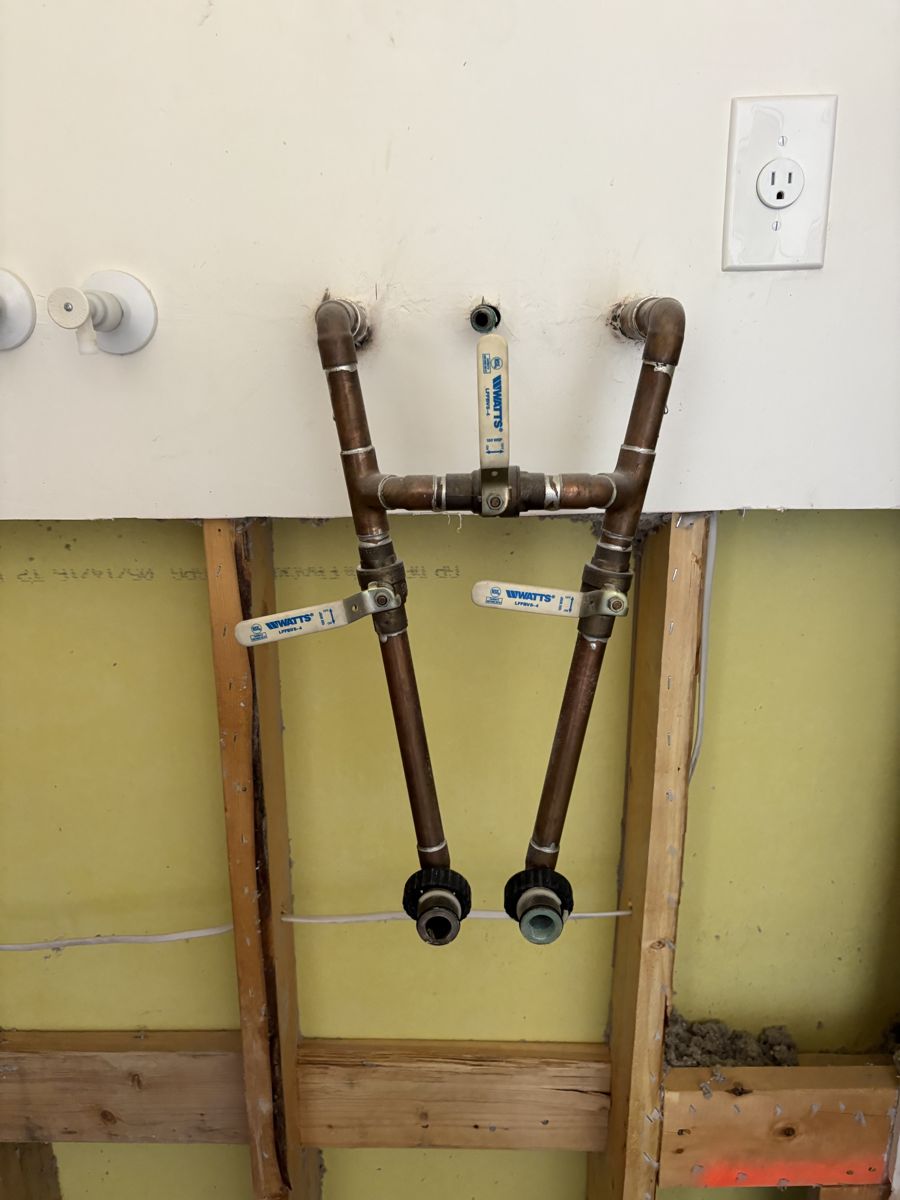 Stub-outs and shutoffs, ready to connect
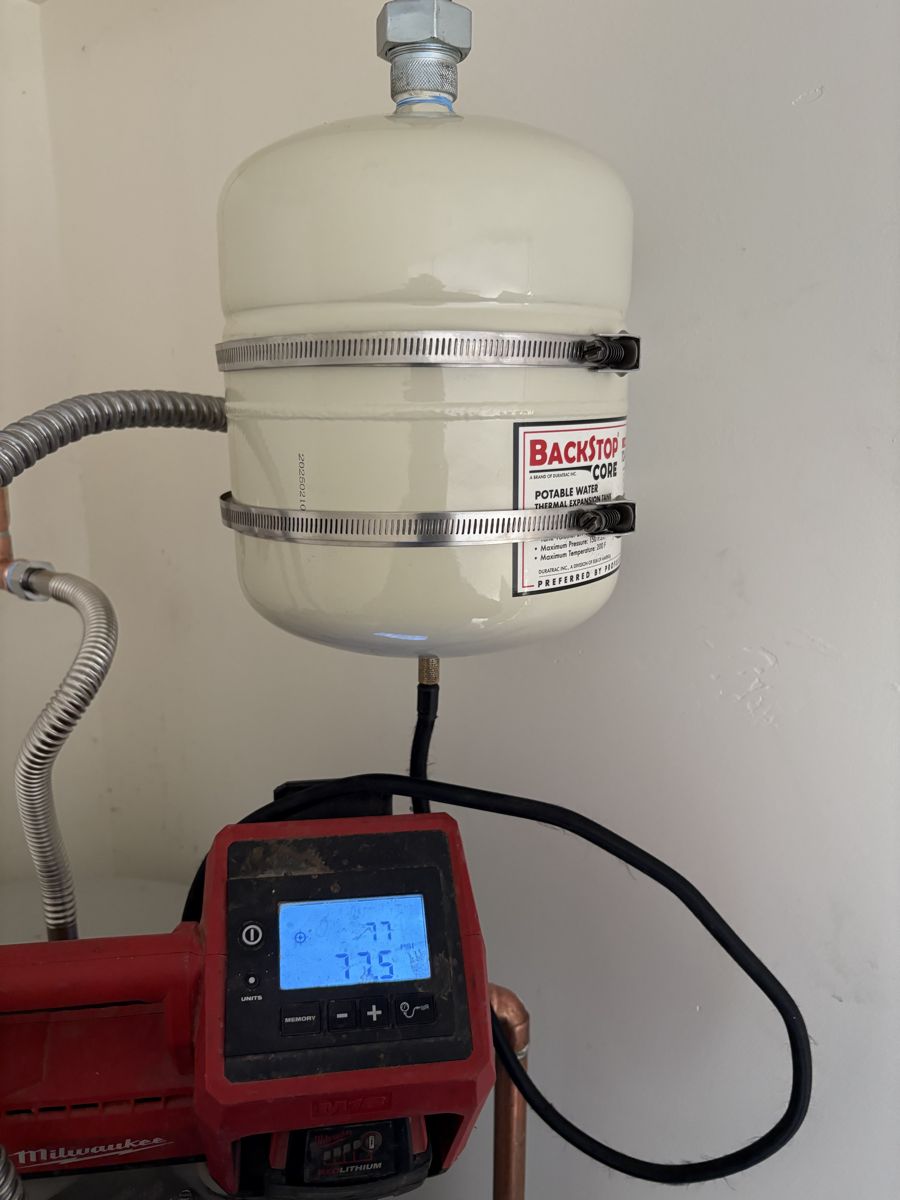 Expansion tank fitted, pressure verified
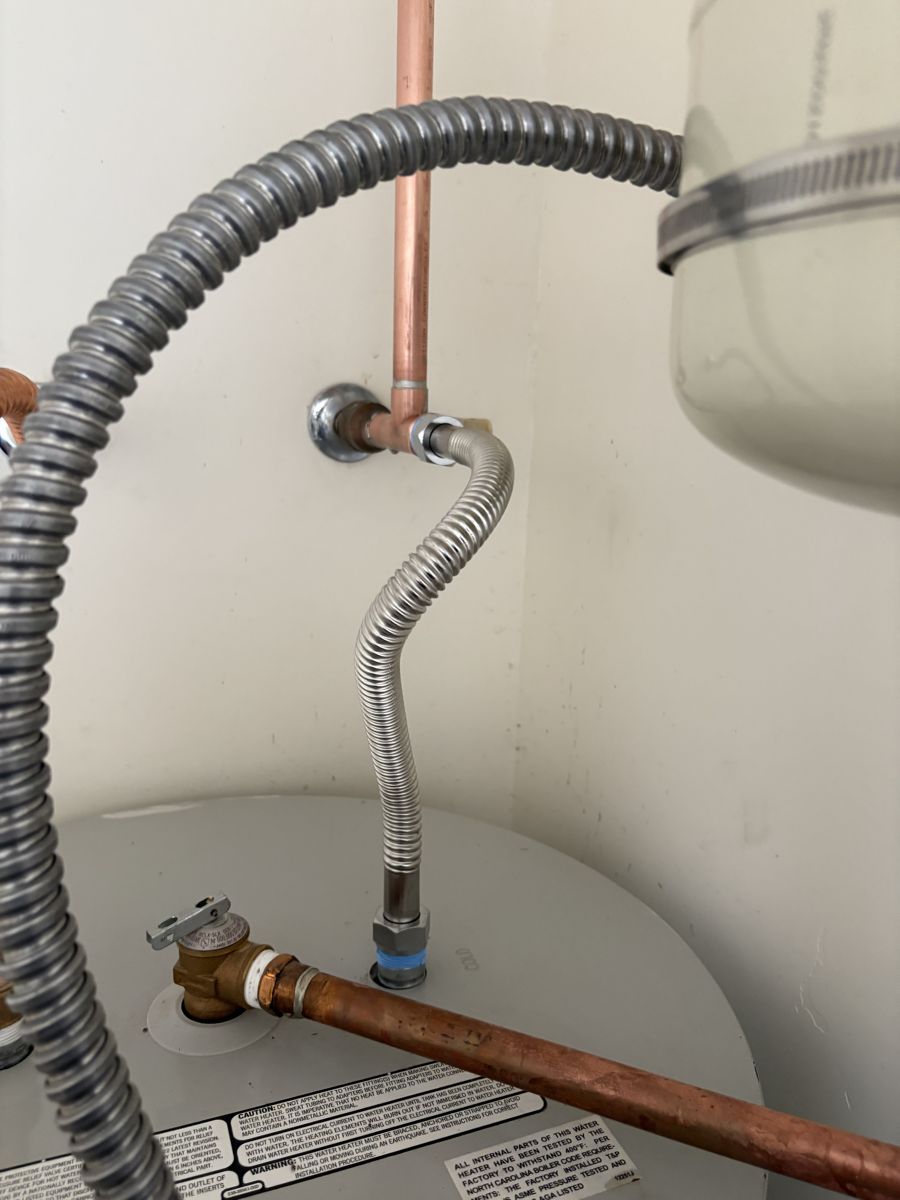 Connections, relief valve, expansion tank
Where tankless conversions happen
Two directions: newer builds where the gas infrastructure is already generous, and remodels in established neighborhoods where somebody wants the garage floor back.
Answers, not a brochure.
Does a tankless water heater need a bigger gas line?
Often, yes. A tankless unit heats on demand rather than storing, so its instantaneous gas demand is typically two to four times the tank it replaced. Whether your line carries that depends on diameter, length back to the meter, and what else is on it: range, dryer, pool heater. We calculate it. Budget $800 to $2,000 for an upsize, and ask early: it’s the biggest swing factor in the quote.
How often does a tankless unit need descaling?
Annually. Valley water deposits scale, and in a tankless unit water is heated as it passes through a narrow heat exchanger, so scale plates onto the exact surface doing the heating. The symptom is reduced flow at your set temperature, then error codes. Confirm the installer is fitting service isolation valves, or the annual descale becomes a much larger job.
Will a water softener make a tankless heater last longer here?
Materially, yes, and it’s the main reason to sequence a softener first. Softened water slows heat exchanger scaling substantially, and several tankless manufacturers reference water hardness limits in their warranty terms.
Do I need a permit for a tankless water heater?
Yes, in every East Valley city. Even where a like-for-like tank swap is exempt, tankless is excluded, and so is any BTU upsize. A tankless conversion is permitted, inspected work under the International Fuel Gas Code. We pull it and the fee is on the written quote.
How long do tankless water heaters last in Arizona?
Phoenix cost data puts gas tankless life at roughly 15 to 20 years against six to ten for a local storage tank, which is the strongest argument for the conversion. That figure assumes the annual descale actually happens. In this water an undescaled unit won’t reach the top of that range, and the failure mode is a heat exchanger, which is the expensive part of the appliance.
Can a tankless unit run two showers at once?
It depends on the unit’s flow rating and the incoming water temperature, and Arizona helps here. Tankless capacity is stated as gallons per minute at a given temperature rise, and incoming water in the valley is warm for most of the year, so the unit has less work to do than the same model in a cold climate. Two standard showers is a common sizing target. Tell us your actual worst-case moment and we’ll size to it.
Often the same visit.
Tell us whether it's replacing a tank or another tankless. That's the whole difference in the number.