
What sewer work costs, and why the range is enormous.
The widest spread on this site, for a real reason: excavation depth and what’s on top of the line.
A sewer line spot repair typically runs $1,000 to $4,000 in the Phoenix metro. A full line replacement runs $4,000 to $19,000. The range is that wide because excavation depth, caliche, run length, and what has to be restored on top (concrete, tile, landscaping, or a street) vary enormously between two houses on the same block. Get it camera'd before anyone quotes.
Range compiled 2026-08-21 from published Phoenix-metro plumbing price guides (plumbingpriceguide.com/phoenix-plumbing-cost, phoenixplumbingauthority.com, desertrainplumbing.com, plumbingphoenixpros.com). Typical installed range for ordinary residential work, not a quote, and not a promise about your house. Caliche excavation differential from published Phoenix-metro contractor pricing. Caliche characterization from University of Arizona Cooperative Extension az1281.
Why nobody can quote this from your description
The pipe is the cheap part. What costs money is getting to it and putting back what was over it. A lateral three feet down under grass is a different job from the same lateral six feet down under a driveway, and caliche, the cemented caliche layer common in Valley soil, turns straightforward digging into equipment work. Two identical houses on the same street can differ by five figures on the same diagnosis.
Camera first isn’t optional here
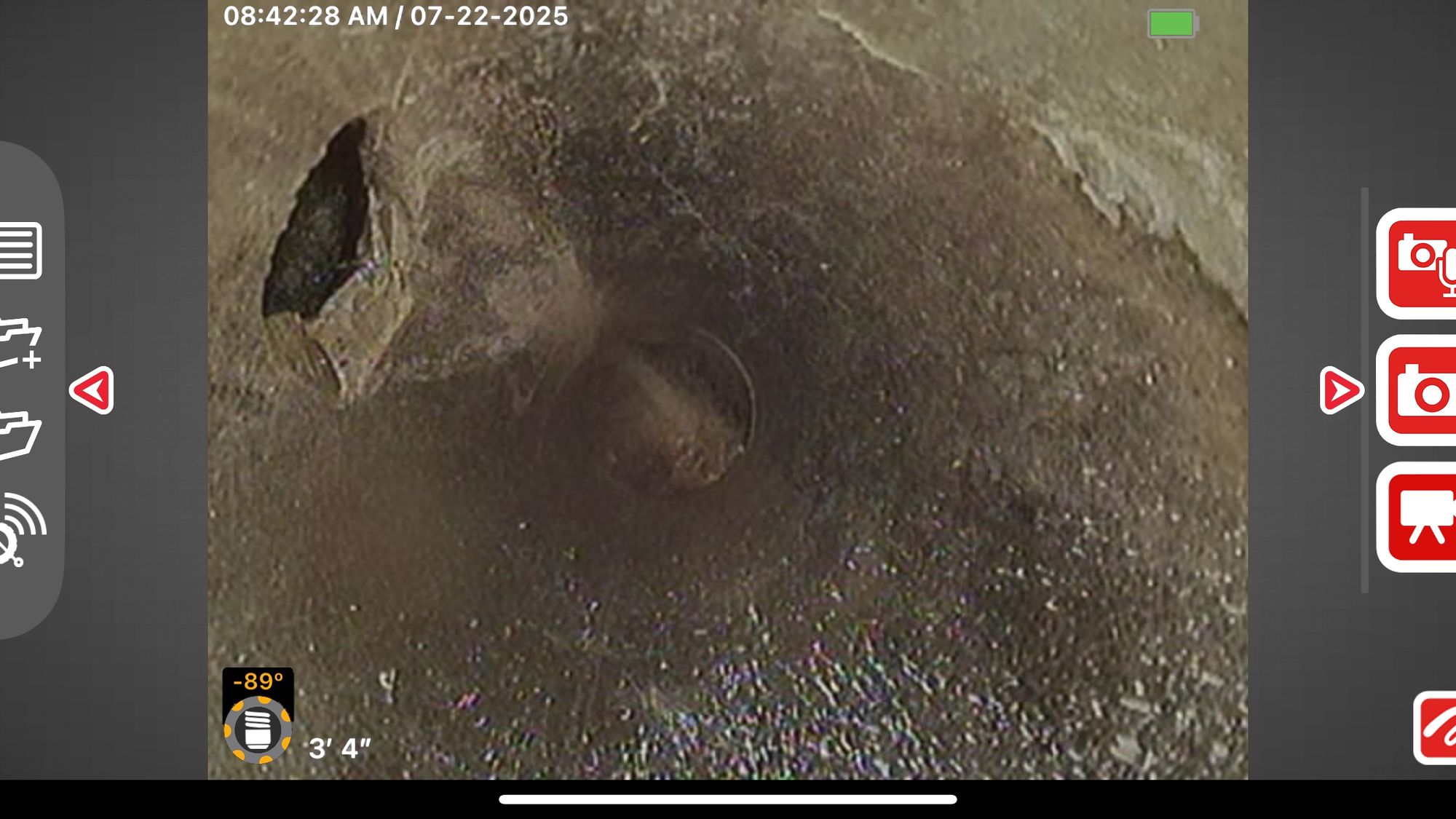
A slow or backing-up main can be buildup, roots at a joint, a belly holding water, or a collapse. Those are a $300 cleaning, a $1,200 jetting, a $2,500 spot repair, and a $12,000 replacement respectively. Anyone quoting a sewer repair without footage is guessing with your yard. Ask to see the recording and ask them to point at the defect. A contractor who has done the work is glad to.
The build-era read
In the older parts of the valley the laterals are the original material and the trees planted with those houses are now large. Root intrusion at joints belongs at the top of the list, and the good news is that root problems frequently resolve with cutting and a spot repair rather than a full replacement. In the newer subdivisions on glued PVC, roots are far less likely and a contractor leading with them should be asked what the camera showed.
Trenchless, and when it helps
Lining or pipe-bursting avoids trenching the whole run, which matters when the line goes under a driveway, mature landscaping, or a street. It’s not automatically cheaper. It trades excavation cost for equipment and material cost, and it requires the existing line to be a suitable candidate. Ask whether it’s an option for your line and what the price difference is before assuming either way.
Depth and what sits on top of the pipe drive this more than the pipe does. Caliche, a driveway, pavers, mature landscaping or a run into the right-of-way all change the number substantially, and restoration is often the largest single line. None of it can be priced before a camera has been down the line.
Where this page cites a utility, permit or housing figure for a specific town, it’s that town’s published data. Your own city’s water report applies to your tap and your city’s building department sets your permit rules; ask us which apply to your address.
What moves it inside the range.
Depth, distance, and what’s on top of the pipe.
Caliche is a cemented calcium-carbonate layer common in southern Arizona soils. It doesn’t damage pipe. It makes reaching the pipe far more expensive. Published Phoenix-metro pricing puts a sewer spot repair at roughly $1,500–$3,500 without caliche and $3,000–$6,000 through it. If your quote is high, this is often the honest reason.
Grass is cheap to restore. A driveway, patio, mature landscaping, or a street isn’t, and restoration is often the biggest number.
A lateral that runs the depth of a long lot to a rear easement costs more than a short front-yard run.
One defect in otherwise sound pipe is a spot repair. Multiple intrusions or a failing material means the whole lateral.
Lining or bursting can avoid trenching. It depends on the existing pipe being a candidate, which the camera decides.
Answers, not a brochure.
Who owns the sewer line: me or the city?
Generally the property owner is responsible for the lateral from the house to the connection point, and the city owns the main. Where exactly that responsibility line sits is worth confirming with your city before you pay for work near the street. Most publish a service-line responsibility diagram.
Can a spot repair fix a root problem for good?
Yes, if the roots are entering at one defect and that section is replaced. Cutting alone is maintenance, not repair. The entry point remains and the roots have an address. That distinction is exactly what the camera is for.
Footage before a quote, and a second quote before an excavator.