
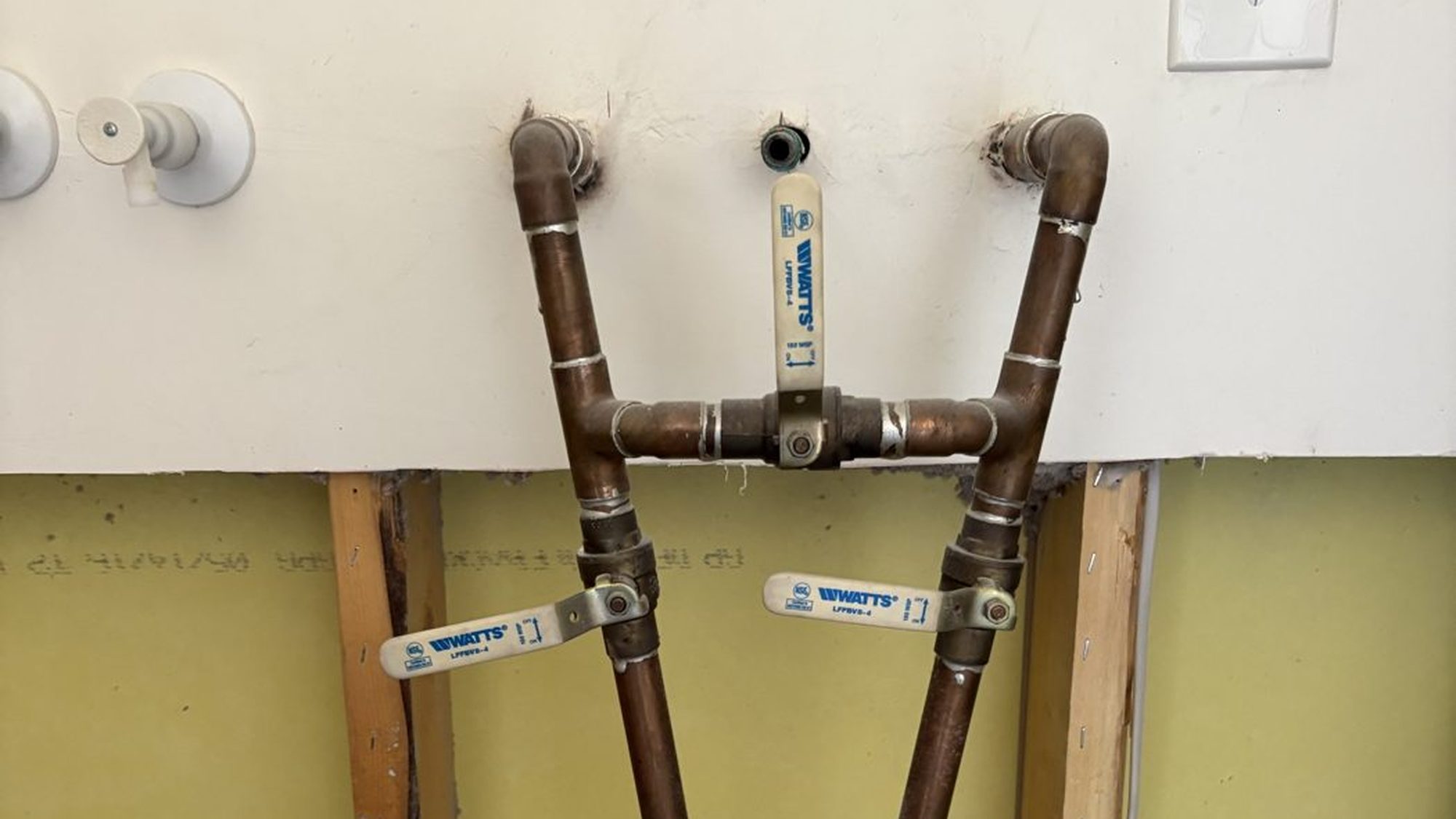
Try the red button before you buy anything.
Two things fix a large share of disposal calls and both are free: the reset button underneath, and the hex wrench slot in the bottom. If those fail, the leak location tells you whether this is a repair.
Before replacing a garbage disposal, press the red reset button underneath and turn the flywheel with the hex wrench that fits the slot in its base. Two free steps that clear most failures. If it leaks from the bottom of the housing, it’s finished and we replace it, typically $350 to $900 installed. A leak at the sink flange or drain connection is a repair.
The two free fixes, in order
A disposal that hums but doesn’t turn is jammed, not dead. Cut the power at the switch and at the breaker. Underneath the unit there’s a hex slot in the center of the base. The small wrench that came with it fits there, and working it back and forth breaks the jam free. Then press the red reset button, also on the bottom. A disposal that does nothing at all, no hum, is usually the reset button, a tripped breaker, or the switch. Never put your hand in the chamber, and never use a broom handle as a lever, which is how people break flywheels that were only jammed.
What the leak location tells you
This is the whole diagnosis. Water at the top, where the unit meets the sink, is a failed sink flange or plumber’s putty seal, and it’s a repair. Water at the side, where the dishwasher hose or the drain elbow connects, is a gasket or a loose connection, and it’s a repair. Water from the bottom of the housing means the internal seal has failed and water is inside the motor housing. There’s no repair for that. We replace it, and the sooner the better, because water sitting in a motor housing under a sink doesn’t stay contained.
The drain below it
A disposal reduces food to slurry. It doesn’t make grease disappear. That slurry travels into a kitchen line whose interior has been roughened by hard-water scale, which is exactly the surface grease adheres to best. A kitchen line that clogs every few months isn’t usually a disposal problem, and replacing the disposal won’t fix it.
Buying the replacement
Horsepower is the specification that matters, and 3/4 horsepower is a reasonable default for a household. Half-horsepower units are cheaper and jam noticeably more. Also worth asking: does the new unit use the same mounting assembly as the old one, because a matching mount turns a two-hour job into a forty-minute one. And if there’s a dishwasher, confirm the knockout plug in the new unit’s dishwasher inlet has actually been removed before installation, because leaving it in is the single most common cause of a dishwasher that won’t drain after a disposal swap.
Where this page cites a utility, permit or housing figure for a specific town, it’s that town’s published data. Your own city’s water report applies to your tap and your city’s building department sets your permit rules; ask us which apply to your address.
Reading a failing disposal
Jammed flywheel. Power off, hex wrench in the slot underneath, work it free, then hit reset. Usually free.
No hum means no power reaching the motor. Reset button first, then the breaker, then the switch.
Internal seal failure with water in the motor housing. Not repairable. Replace it.
Sink flange or putty seal. This is a repair, and a fairly quick one, not a new unit.
Buildup on the grind ring and chamber wall. Ice and citrus help. A chamber that stays foul is worn out.
Something hard is in the chamber, or the grind components have worn. Power off before looking.
What disposal work runs in the East Valley
A jam clear is often free if you do it yourself. Replacement is priced mostly on the unit and on whether the mounting assembly and drain connections carry over from the old one.
Planning range, flagged honestly: the published Phoenix-metro sources checked on 2026-08-21 (plumbingpriceguide.com/phoenix-plumbing-cost, phoenixplumbingauthority.com, desertrainplumbing.com, plumbingphoenixpros.com) didn’t carry a specific local figure for this job, so this range is built from local labor rates plus the components involved. Individual Phoenix pages do publish disposal figures and they disagree by more than double (one at $190–$475 installed, another at $425–$1,000) which is common on a service that mixes a cheap unit swap with an awkward under-sink rebuild. A daytime service call in this market is $65–$125 on its own, which is most of why the floor here’s not lower. Treat it as a sanity check rather than a benchmark, and not as a quote.
The diagnostic fee comes off the repair. We charge a service call to come out and diagnose the problem. If you approve the work, that fee is credited against it in full. You hear the fee on the phone before anyone drives, and it’s the same number at every location.
How a replacement goes
We isolate the power, not just the switch
The switch isn’t enough when someone's hands are going near the mount. Breaker off, and confirmed off, before we loosen anything.
We drop the old unit and check the mount
The hardest part of this job is the angle under your sink. Whether the new unit matches your existing mount decides the labor from here.
We mount the new one and connect it
Sink flange sealed, unit hung, drain elbow and dishwasher inlet connected. We knock the dishwasher plug out before we hang it, not after.
We run it and watch every joint
Water on, unit run under load, and we inspect every joint while it’s running. Under-sink leaks show up under vibration, not at rest.
What this job looks like when we do it.
Not stock, not a rendering, and nothing generated. Every photograph on this site is an actual plumbing job in an actual house.
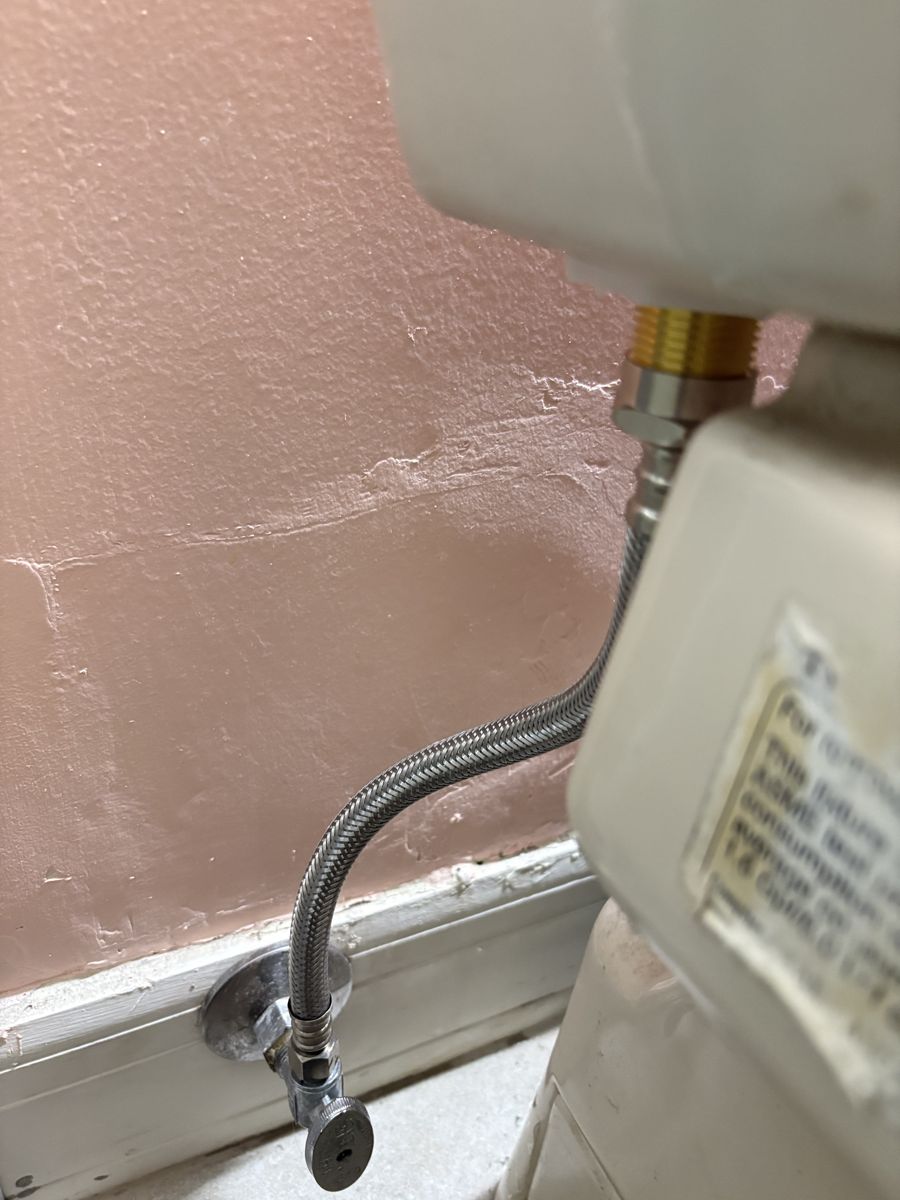 New supply line and angle stop
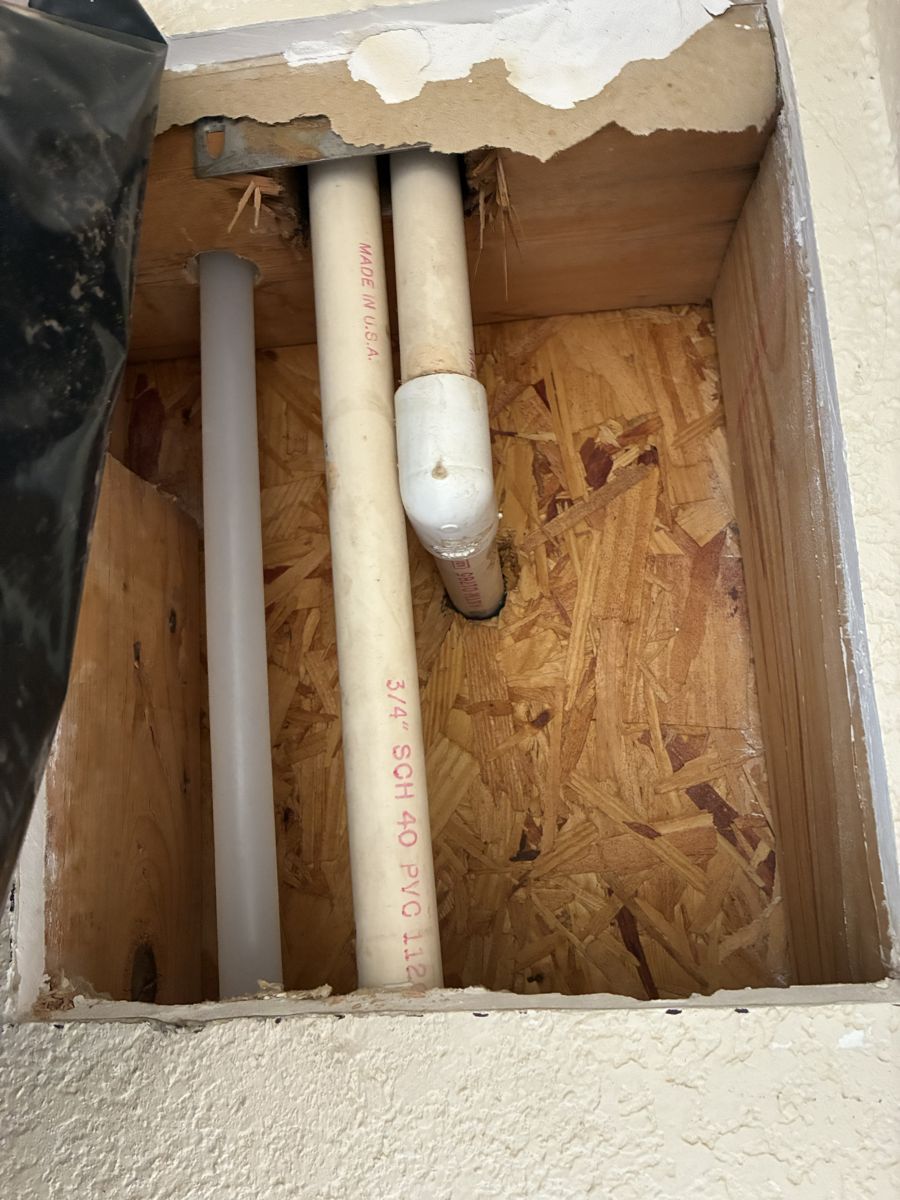 PVC exposed for a repipe
Disposals across the East Valley
Every kitchen has one and they all fail the same ways. Newer builds tend to have builder-grade half-horsepower units, which are the ones that jam most and get replaced first.
Answers, not a brochure.
My disposal hums but won't turn. What do I do?
It’s jammed rather than dead, and this is usually free. Turn off the switch, then the breaker. Look at the bottom of the unit for a hex slot in the center. The small wrench that shipped with the disposal fits there, and working it back and forth breaks the jam loose. Then press the red reset button, also underneath. Never reach into the chamber, and never lever the flywheel with a broom handle.
When does a garbage disposal need replacing instead of repairing?
The leak location decides it. Water from the bottom of the housing means the internal seal has failed and water is inside the motor. There’s no repair for that at any price. A leak at the top where the unit meets the sink is a flange or putty seal issue, and a leak at the side is a drain or dishwasher gasket. Both are repairs. Beyond leaks, a unit that jams constantly after being freed, or grinds metallically, has worn out its grind components.
What size disposal should I get?
Three-quarter horsepower is a sensible default for a household. Half-horsepower builder-grade units are cheaper and they jam noticeably more, which is why they’re the ones most often replaced first. One horsepower is more than most kitchens need. The more useful question to ask us is whether the new unit uses the same mounting assembly as your old one, because a matching mount can cut the labor on the job roughly in half.
Does a garbage disposal cause drain clogs?
It contributes, and the drain line is usually the real problem. A disposal reduces food to slurry but doesn’t make grease disappear, and that slurry enters a kitchen line whose interior has been roughened by hard-water scale. Grease bonds far better to a rough surface than to smooth pipe. If your kitchen line clogs every few months, replacing the disposal won’t fix it. Cleaning the line will.
Why does my dishwasher back up after a new disposal was installed?
Almost always the knockout plug. New disposals ship with a plug sealing the dishwasher inlet, and it has to be punched out before the dishwasher hose is connected. If it was left in, the dishwasher has nowhere to drain and backs up into itself or the sink. It’s a two-minute fix and it’s the single most common callback on a disposal swap. Mention it to whoever installed it and it shouldn’t be a charged visit.
Try the reset and the hex slot first. If it still hums, tell us and we'll come out.