
Most of what's wrong with a toilet costs twelve dollars.
A running toilet is almost always a flapper or a fill valve, and both are inexpensive parts. What separates a cheap visit from an expensive one is whether the leak is at the tank or at the floor.
A running toilet is nearly always a worn flapper or a failing fill valve, both inexpensive parts, and repair typically runs $350 to $500 in the East Valley. A toilet leaking at the base is a different problem. The wax seal or the closet flange, and on slab-on-grade construction a damaged flange set in concrete is what turns a routine replacement into a $1,000 job.
The free test that identifies most problems
Put a few drops of food coloring in the tank and don’t flush. Wait twenty minutes and look in the bowl. Color in the bowl means the flapper isn’t sealing and water is passing continuously from tank to bowl. A running toilet that’s quietly running up your water bill. If there’s no color in the bowl but you hear the fill valve cycling on intermittently, the fill valve is the culprit instead. That’s two of the three most common toilet complaints diagnosed in twenty minutes with something already in your kitchen.
Why hard water is hard on toilet parts
Flappers, fill valve seals, and flush valve seats are all rubber and plastic surfaces that have to seal against mineral-heavy water. Mineral builds on the seat and on the flapper’s sealing surface, and a rubber part can’t seal against a rough deposit. Add chlorine, which degrades rubber over time, and toilet internals here have a shorter life than the packaging suggests. This is also why cleaning the flush valve seat with a scouring pad before fitting a new flapper matters. A new part on a scaled seat leaks just like the old one.
The base leak, and the slab
Water appearing around the bottom of the toilet is the one that deserves attention today. It usually means the wax ring has failed, and the fix is straightforward: pull the toilet, replace the seal, reset it. What complicates it here is the closet flange. Where the house is on a slab, that flange sits in the concrete floor (drain lines are the ones that have to run below a slab, because they need gravity slope) and if it has corroded, cracked, or ended up below finished floor level after someone tiled over the original, it has to be repaired or extended before the toilet goes back. That’s real additional work, and it’s the single most common reason a toilet installation quote comes in higher than expected. A toilet that rocks is often telling you the flange is already in trouble.
Buying the replacement
Measure the rough-in first: the distance from the finished wall to the center of the closet bolts, almost always 12 inches, occasionally 10 or 14 in older houses. Get that wrong and nothing else matters. Beyond fit, the decisions are height (comfort height is taller and most adults prefer it), one-piece versus two-piece, and flush performance: modern high-efficiency toilets use well under half the water of a 1980s fixture, which isn’t a small consideration on a desert water bill. Ask us to include the new supply line and closet bolts rather than reusing yours, and confirm haul-away of the old fixture is in the price.
Where this page cites a utility, permit or housing figure for a specific town, it’s that town’s published data. Your own city’s water report applies to your tap and your city’s building department sets your permit rules; ask us which apply to your address.
What the toilet is doing and what it means
A flapper not sealing, letting the tank drain until the fill valve wakes up. The dye test confirms it in twenty minutes.
Wax seal or closet flange. Don’t ignore this one. Water going into a slab-on-grade floor has nowhere good to go.
Loose closet bolts at best, a failing flange at worst. Either way it will break the wax seal if it keeps moving.
Often mineral blocking the rim jets and the siphon jet. A wire and vinegar solve more of these than a new toilet does.
A fill valve fouled with mineral, or a partly closed supply stop. Check the stop before buying the valve.
A dried-out or broken trap seal, or a wax ring that has failed without visible water. Worth a look rather than an air freshener.
What toilet work runs in the East Valley
Be clear about what the floor of this range is: it’s a service visit, not a part. The flapper costs about twelve dollars: what you’re paying for is someone with a license at your house, and a daytime service call alone runs $65 to $125 in this market.
Planning range, flagged honestly: the published Phoenix-metro sources checked on 2026-08-21 (plumbingpriceguide.com/phoenix-plumbing-cost, phoenixplumbingauthority.com, desertrainplumbing.com, plumbingphoenixpros.com) didn’t carry a specific local figure for this job, so this range is built from local labor rates plus the components involved. Individual Phoenix pages publish toilet figures that split repair from installation. One at $150–$450 for repair and $300–$700 for installation, another at $190–$760 installed, noting slab-mounted flange access as the driver of the high end. Combined into one page range with a real minimum visit charge included, the local planning band lands at $350–$1,000. Treat it as a sanity check rather than a benchmark, and not as a quote.
The diagnostic fee comes off the repair. We charge a service call to come out and diagnose the problem. If you approve the work, that fee is credited against it in full. You hear the fee on the phone before anyone drives, and it’s the same number at every location.
How the visit runs
We separate the symptom from the cause
Running, leaking at the base, weak flush, and slow fill are four different problems with four different parts. A dye test and a look under the tank sort them quickly.
We replace the internals properly
We clean the mineral off the flush valve seat before a new flapper goes on. A new part sealing against a scaled seat leaks the same way the old one did.
If it comes off the floor, we inspect the flange
Once the toilet is up the closet flange is visible, and that’s the moment we assess its condition and price it: before the new seal goes down.
We reset it, level it, and test it
New wax seal, bolts snugged evenly without cracking porcelain, fixture shimmed level if it needs it. Then we flush it repeatedly and check the base.
What this job looks like when we do it.
Not stock, not a rendering, and nothing generated. Every photograph on this site is an actual plumbing job in an actual house.
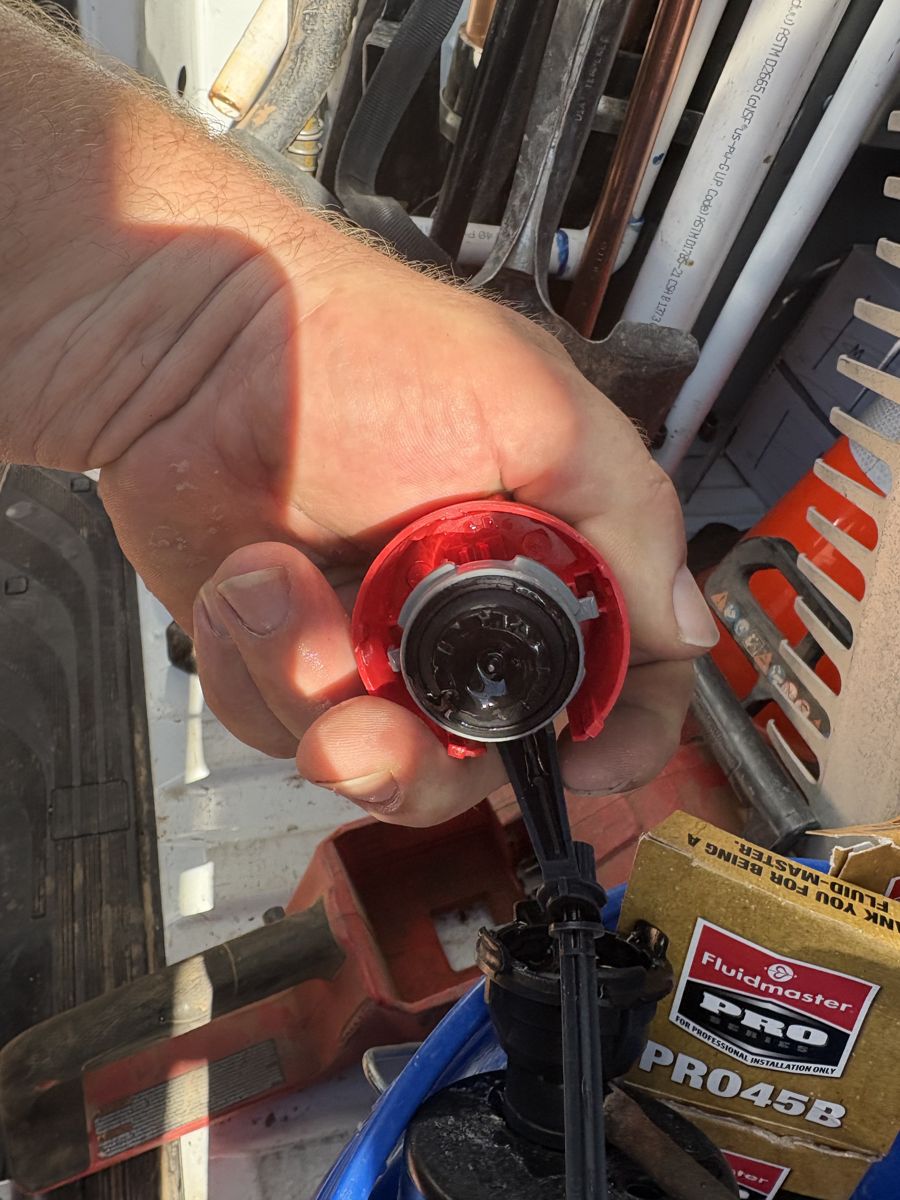 The part that fixes most running toilets
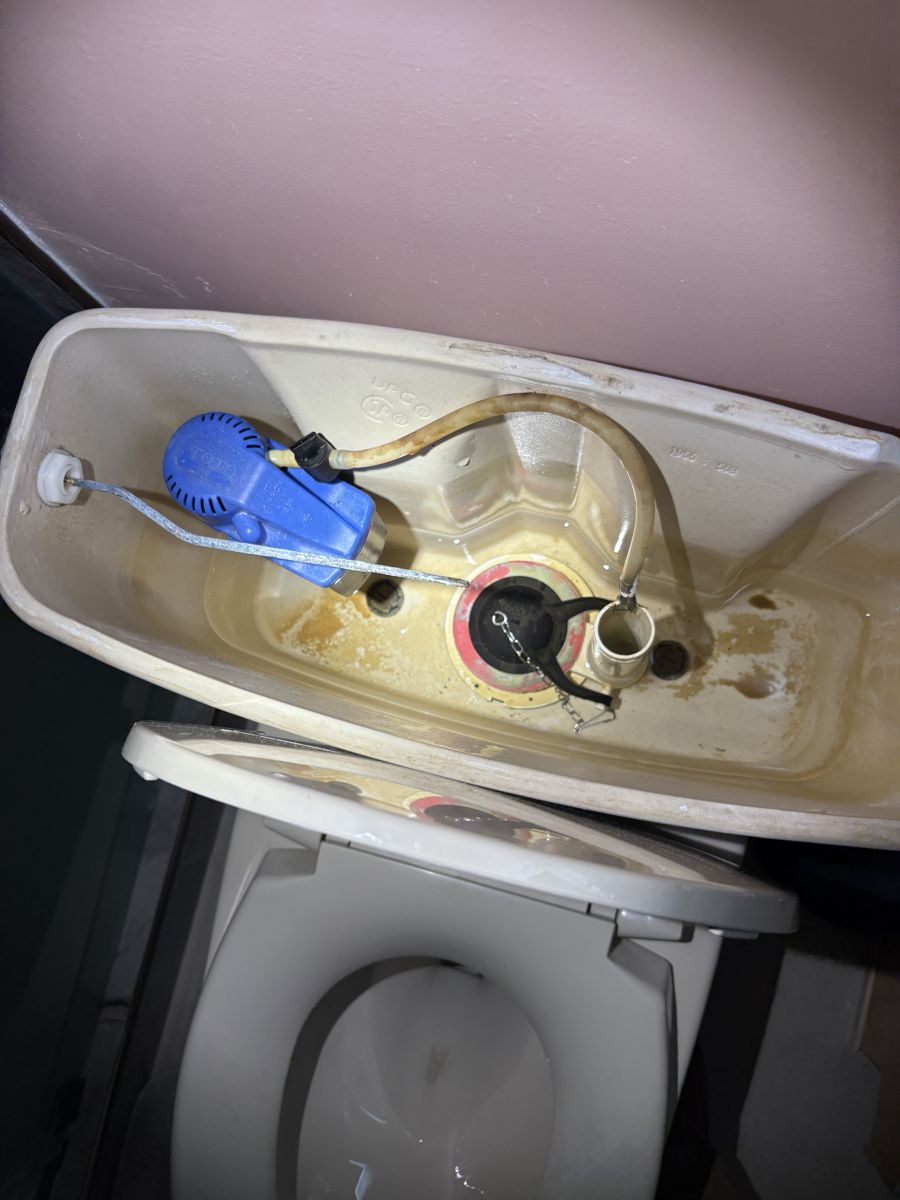 Before: worn flapper, scaled tank
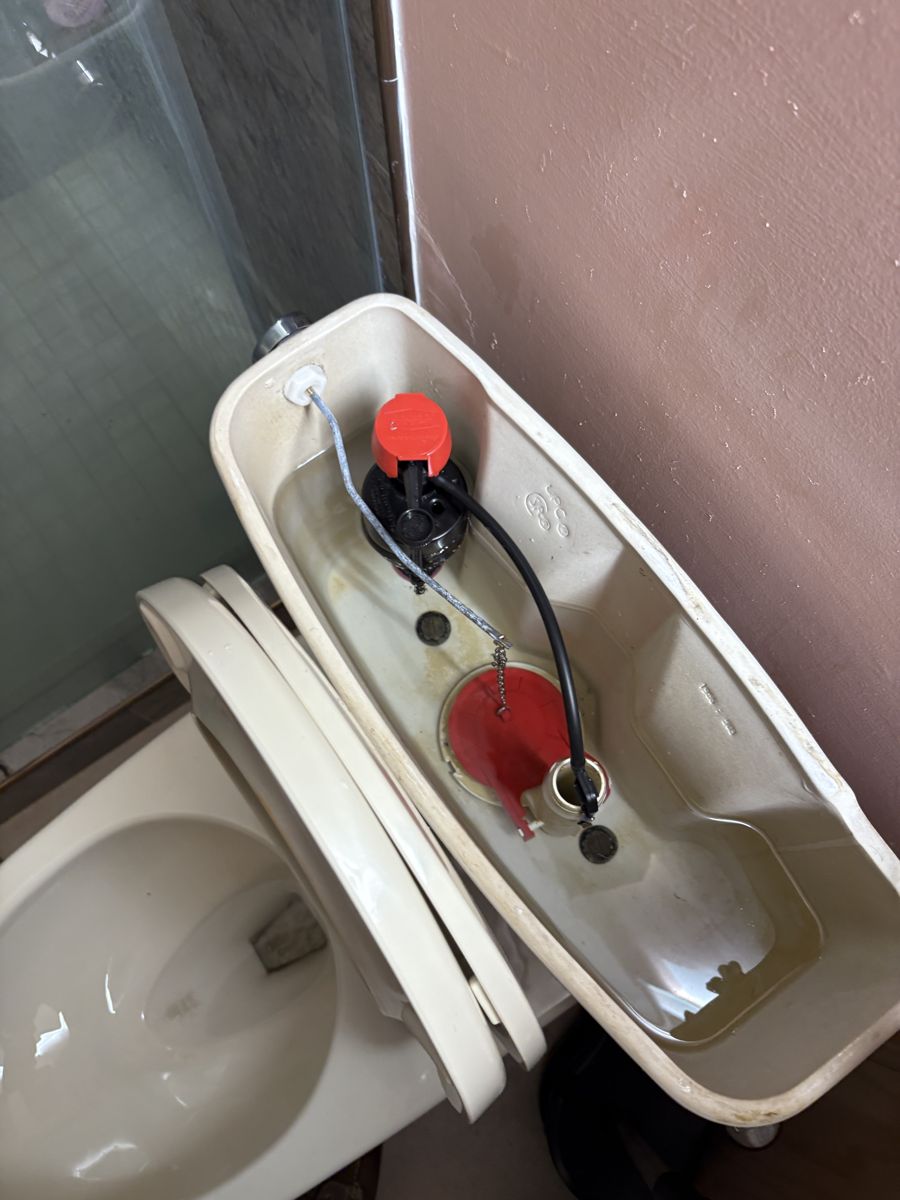 After: new flapper and fill valve
Toilets across the East Valley
Internal parts wear out on the same schedule in every house because they’re sealing against the same water. Flange problems skew older, where the fixture has been pulled and reset more than once.
Answers, not a brochure.
Why does my toilet keep running?
Almost always the flapper. Put a few drops of food coloring in the tank, wait twenty minutes without flushing, and look in the bowl: color in the bowl means the flapper isn’t sealing. In hard water, mineral builds on the flush valve seat and a rubber flapper can’t seal against a rough deposit. Replacing the flapper without scouring that seat clean is the most common reason a new part leaks exactly like the old one did.
My toilet is leaking at the base. How serious is that?
More serious than a running toilet, and worth handling promptly. It usually means the wax ring has failed, and the water is going into the floor. On a slab that means water at the concrete and under whatever flooring surrounds it. The fix is to pull the toilet and replace the seal, and the variable is the closet flange underneath: if it has corroded, cracked, or sits below finished floor level, it has to be repaired before the fixture goes back.
Is it worth repairing an old toilet or should I replace it?
Repair the internals: flappers, fill valves, and supply lines are inexpensive and a sound porcelain fixture lasts decades. Replace when the porcelain is cracked, when the fixture rocks because the flange is failing anyway and it’s already coming off the floor, or when you want the water savings. A pre-1990s toilet uses several times the water per flush of a current high-efficiency model, which is a real consideration on a desert water bill.
What size toilet do I need?
Measure the rough-in before anything else: the distance from the finished wall behind the toilet to the center of the closet bolts holding it down. Twelve inches is standard and covers the great majority of homes. Ten and fourteen inches exist, mostly in older construction. Get that measurement wrong and the fixture won’t fit regardless of everything else. After that it’s height, one-piece versus two-piece, and flush performance.
Why is my toilet flushing weakly?
Usually mineral, not mechanics. Hard water deposits scale in the rim jets under the bowl lip and in the siphon jet at the bottom. Both restrict the water that creates the flush. A small mirror, a piece of wire, and vinegar clear more weak flushes than any replacement part, and it costs nothing to try first.
Can I install a toilet myself?
Many people do, and the two places it goes wrong are worth knowing. First, overtightening the closet bolts cracks the porcelain, and that’s the end of a new fixture. Second, if the flange is damaged or sits below the finished floor, a standard wax ring won’t seal and the leak reappears in a month. That situation needs a flange repair or an extension ring, not more wax. If the toilet has been rocking, assume the flange needs looking at.
Run the dye test first. If color reaches the bowl, it's a flapper and it's cheap.