
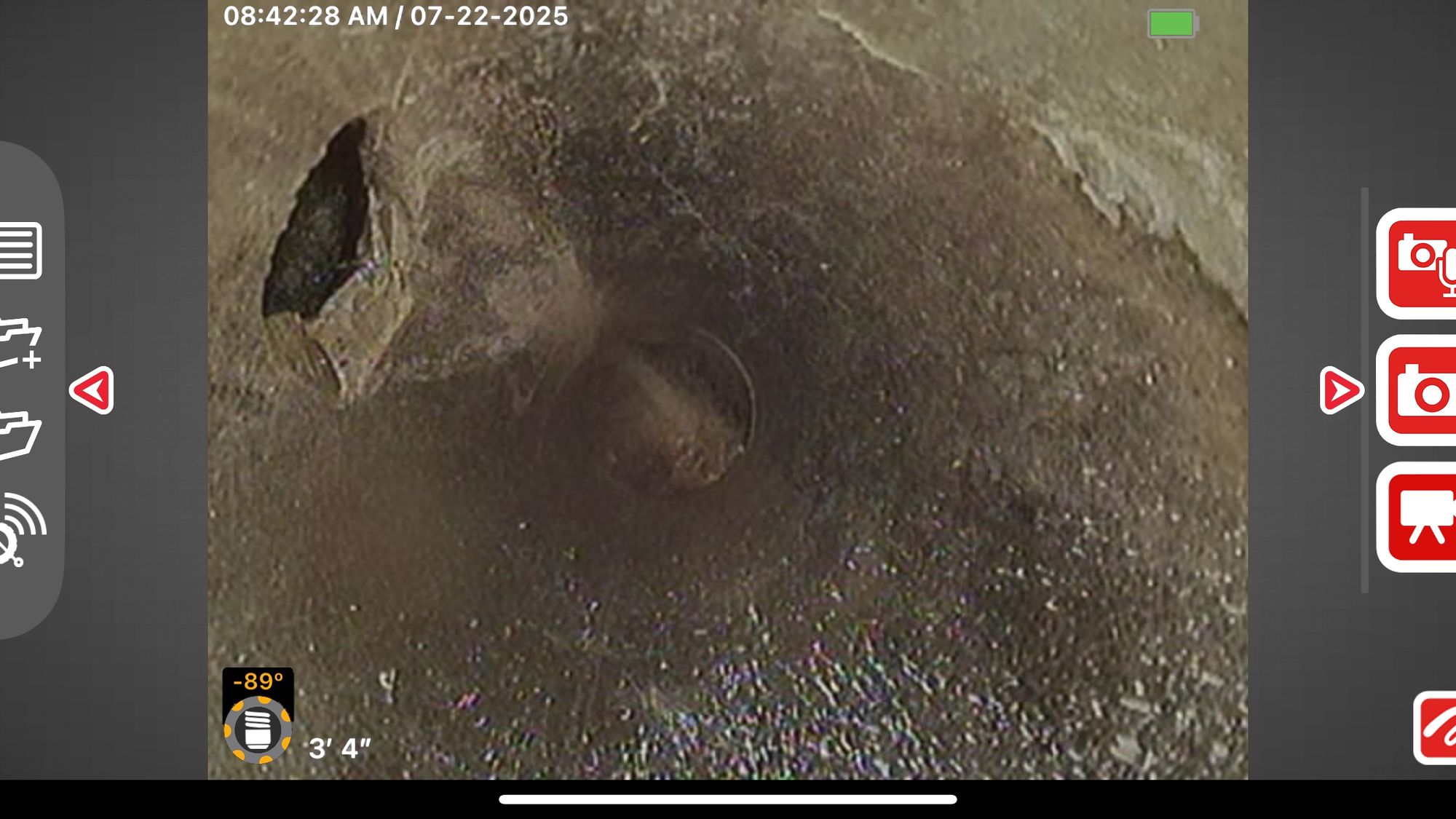
Can tree roots really break my sewer line?
Roots rarely break sound pipe. They find a joint or crack that’s already weeping and grow toward the water, then thicken until they catch everything moving past. But be skeptical of the version you usually hear: the “old clay sewer pipe” story fits the oldest pockets of the valley and almost none of the subdivisions built after 1990, where plastic sewer pipe was already standard.
Why this is a smaller problem than the ads suggest, in most of the valley
Root intrusion is a genuine failure mode and it’s also one of the most heavily marketed ones, because it justifies an excavation. Plastic sewer materials entered the plumbing codes in the early 1970s and have been common ever since, so the classic clay-and-cast-iron root story belongs to the oldest pockets: parts of Scottsdale, Tempe and older Mesa. Around our Queen Creek location, where only 12% of homes predate 2000, it barely applies at all.
That doesn’t make it impossible. Roots still find PVC at a joint that has shifted or was poorly seated, and much of the East Valley sits inside the land subsidence feature mapped by the Arizona Department of Water Resources, which is the kind of ground movement that opens joints. But if a contractor leads with roots on a 2012 house before showing you footage, ask what the camera found.
What it looks like from inside the house
- Recurring main-line backups, weeks or months apart, in the same line.
- Gurgling toilets when other fixtures drain.
- A backup that clears with a snake and returns. The classic signature, because a cable cuts a channel and the roots keep growing.
- Unusually green or fast-growing grass along the line's run.
What actually fixes it, in order of cost
- Mechanical cutting: clears the mass. Cheapest. The roots return, because the entry point is still there.
- Cutting plus hydro jetting: cleans the joint properly rather than coring a channel. Buys longer.
- Spot repair: excavate and replace the compromised section. Permanent for that joint.
- Lining or full replacement: for a lateral with multiple intrusions.
One local cost note: excavation here can run into caliche, the cemented calcium-carbonate layer common in southern Arizona soils. It doesn’t damage pipe. It makes digging to the pipe much more expensive. Published local pricing puts a sewer spot repair around $1,500–$3,500 without caliche and $3,000–$6,000 through it. If your quote is high, that may be the honest reason.
The thing homeowners get wrong
Cutting roots once and considering it solved. The entry point is a defect in the pipe, and until that’s fixed the roots have an address. Cutting is maintenance, not repair. A legitimate choice if you know that’s what you bought.
Sewer material era per City of Tempe Building Safety on plastics entering the UPC in the early 1970s. Subsidence: Arizona Dept. of Water Resources, East Valley land subsidence feature. Housing age around our locations: US Census ACS 2023 5-year by ZCTA. Caliche characterization: University of Arizona Cooperative Extension az1281. Caliche excavation differential from published Phoenix-metro contractor pricing.
Where this page cites a utility, permit or housing figure for a specific town, it’s that town’s published data. Your own city’s water report applies to your tap and your city’s building department sets your permit rules; ask us which apply to your address.
The next thing you were going to ask.
One slow drain is a fixture. Every drain slow is the main line, and that changes everything.
What's the difference between snaking a drain and hydro jetting?→A snake punches a hole through. A jetter scours the pipe wall. Different jobs, different prices.
What kind of pipes are in my house?→Build year tells you more than anything else. A rough era guide for the East Valley.