
Finding the leak is a separate job from fixing it.
Detection is priced on its own because it’s its own work. It converts a rising water bill into a marked spot on a floor, which is the only thing that turns a guess into a fixed quote.
Leak detection is the paid step that locates a hidden leak before anything is opened, using pressure isolation, acoustic listening equipment, and thermal imaging. It’s worth paying for because a repair quote given before the locate is a quote on a guess. It either gets padded to cover the unknown or it changes once someone starts cutting into a wall or slab.
Start with the test that costs nothing
Before you call anyone, run the meter test. Shut off every fixture and appliance that uses water, including the ice maker and the irrigation timer, then find your water meter and watch the low-flow indicator for about fifteen minutes. If it moves, water is leaving the system with nothing turned on. That single observation is worth more to us than any description of the symptom, and it costs you a quarter of an hour. If the dial is still, the loss is more likely a running toilet flapper or an irrigation valve than a pressurized leak.
What the equipment can and can’t do
Acoustic detection listens for the specific frequency of pressurized water escaping a pipe, which is why the house has to be quiet and why we’ll ask you to turn off the air handler. Thermal imaging reads surface temperature differences, so it’s excellent on hot-water lines under a slab and much weaker on cold lines. Tracer gas, where a safe hydrogen-nitrogen mix is introduced into the isolated line and sniffed at the surface, is the fallback when the first two disagree. None of them see through concrete. They narrow a house down to a spot, which is all anyone needs.
Why it’s nearly always on your side of the meter
East Valley water utilities run well-maintained systems; main breaks are rare. When water disappears, it’s nearly always downstream of the meter, which is exactly the side no municipal crew is coming to look at. Meanwhile hard water has spent decades narrowing the copper with scale, and scale-narrowed copper is what eventually gives way at a bend.
What a good detection visit produces
You should end the appointment holding three things: a marked location, a stated method for the repair, and a price range for that method. If we can’t tell you which of those three we’re confident about, the detection isn’t finished. Ask specifically whether the leak is on the hot side or the cold side. We determine that by pressure-testing each side independently, and it changes the repair. Ask whether the line is under the slab, in a wall, in the attic, or outside between the meter and the house, because those are four different jobs at four different prices.
Where this page cites a utility, permit or housing figure for a specific town, it’s that town’s published data. Your own city’s water report applies to your tap and your city’s building department sets your permit rules; ask us which apply to your address.
When it’s worth paying someone to look
The most definitive symptom there’s. Nothing else needs to be true for this to be worth a call.
Compare gallons month over month on the bill, not dollars. Rate changes muddy the dollar figure.
Visible moisture with no fixture above it means the source is inside the wall or under the floor.
A loss upstream of the fixtures shows up everywhere at once rather than at one faucet.
A line between the meter and the house leaking underground waters that strip and nothing else.
Ambient noise drops after midnight, which is when a small pressurized leak becomes audible in a quiet hallway.
What detection runs in the East Valley
Detection is priced as its own visit. Many contractors credit some or all of it toward the repair if you proceed with them, which is a question worth asking anyone before they drive over.
Compiled 2026-08-21 from published Phoenix-metro price guides (plumbingpriceguide.com/phoenix-plumbing-cost, phoenixplumbingauthority.com, desertrainplumbing.com, plumbingphoenixpros.com), which carry a local figure for this job. Those guides put electronic leak detection at $250–$700 for the Phoenix metro. For reference, a daytime service or diagnostic fee in this market runs $65–$125 on its own. These are metro-wide planning guides, not a quote: only the plumber standing in your house can give you one.
The diagnostic fee comes off the repair. We charge a service call to come out and diagnose the problem. If you approve the work, that fee is credited against it in full. You hear the fee on the phone before anyone drives, and it’s the same number at every location.
How we actually run the locate
We get the house quiet
Air handler off, pool equipment off, everything that hums switched down. Our acoustic equipment is listening for a sound quieter than a refrigerator.
We isolate hot from cold
We shut and pressure-test each side separately. Whichever side loses pressure is where we search, which halves the work immediately.
We narrow it to a spot
We walk the run with acoustic listening until we find the loudest point, then cross-check it with thermal imaging. On a slab that ends as a marked X on your floor.
We leave you a scope, not a shrug
We finish with the location, the repair method your foundation allows, and a price range for that method. Anything less and the detection isn’t finished.
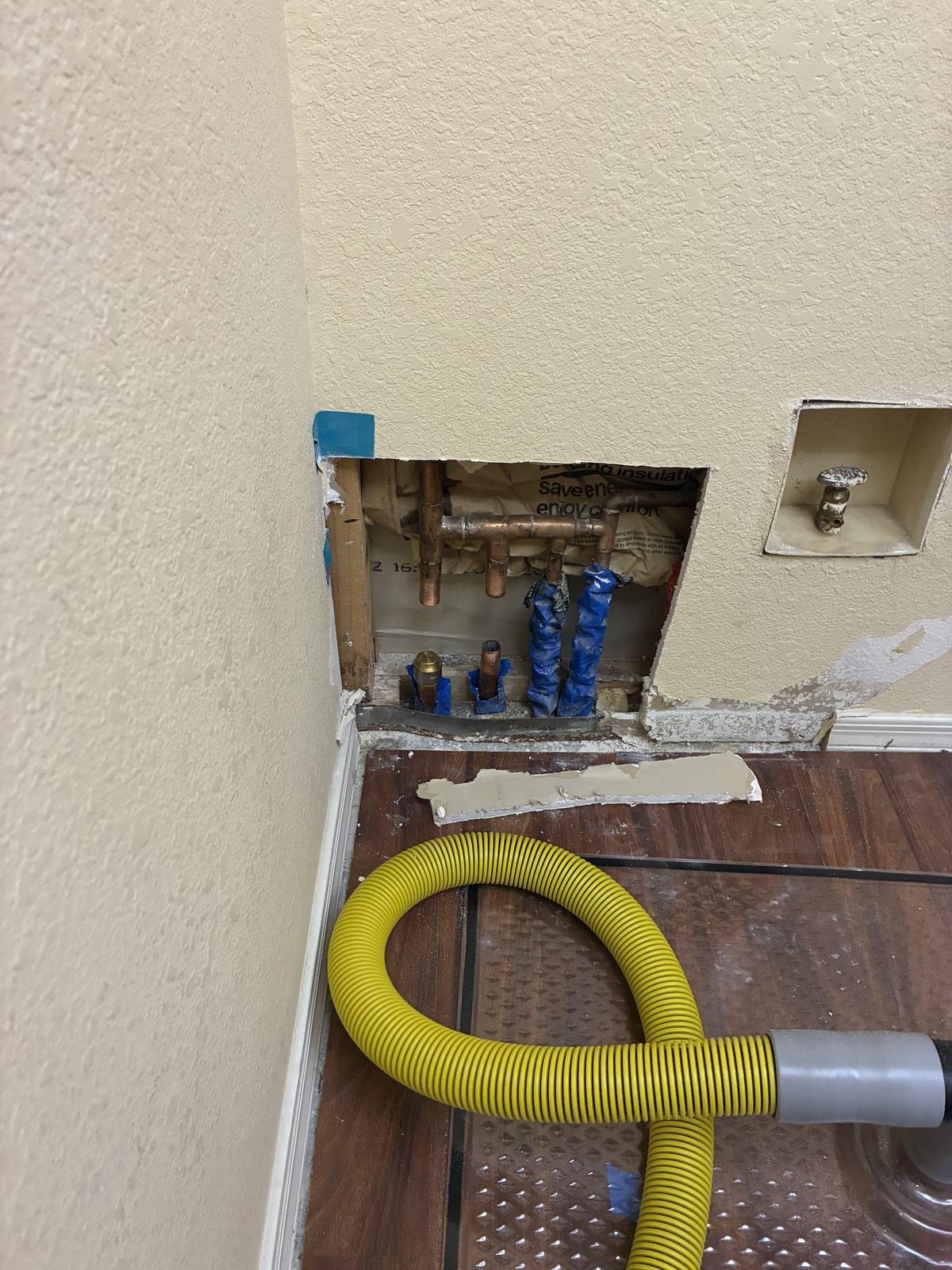
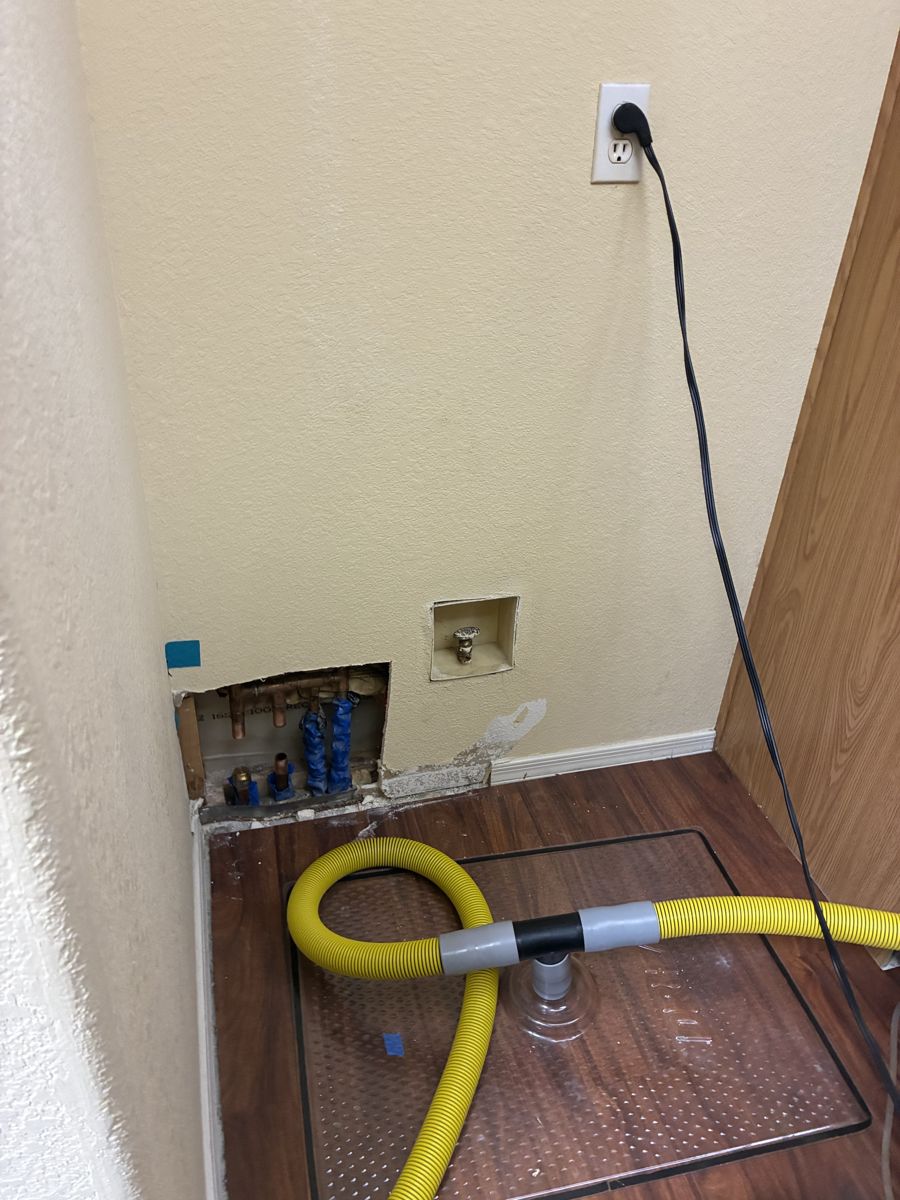
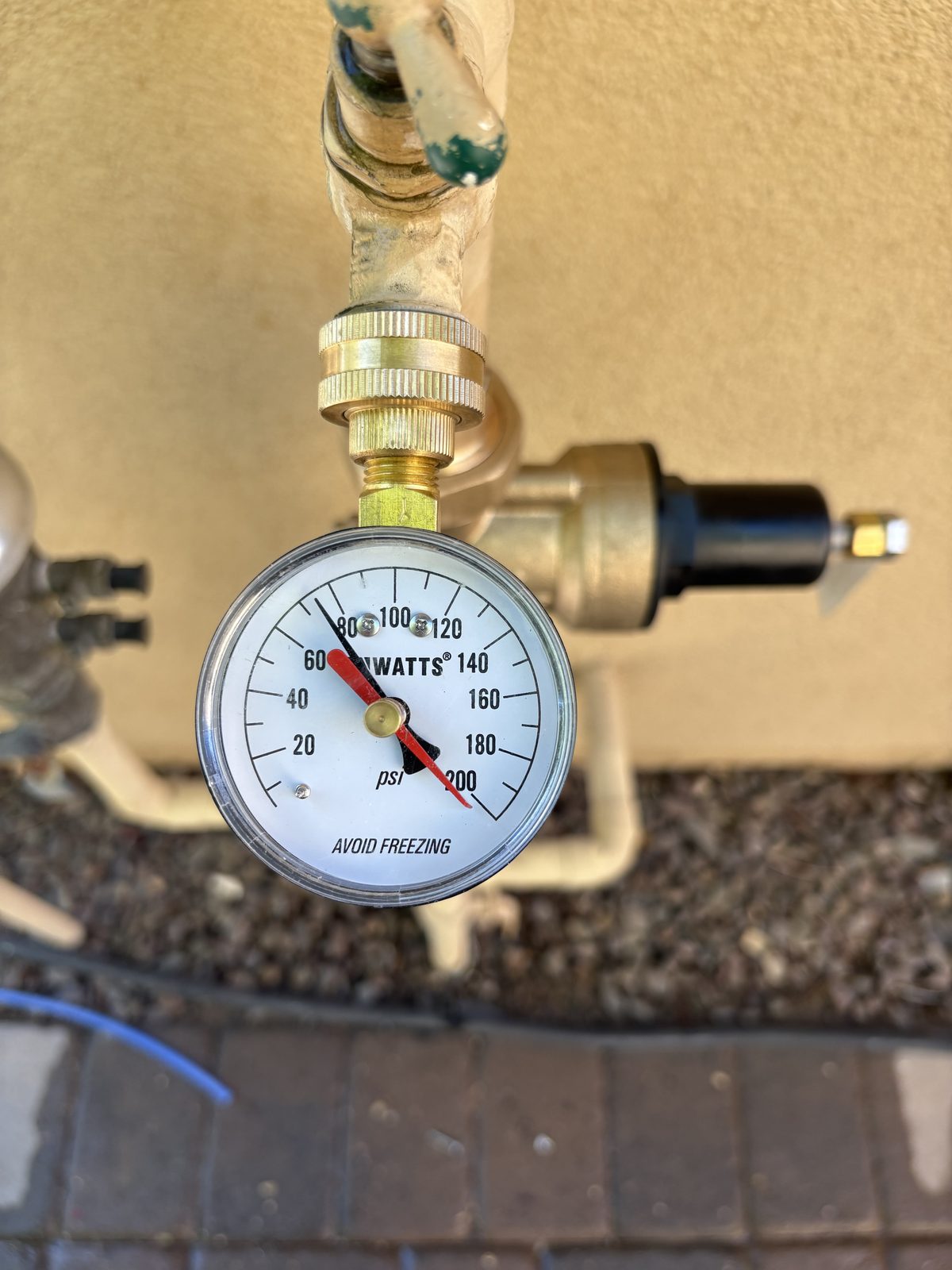
What this job looks like when we do it.
Not stock, not a rendering, and nothing generated. Every photograph on this site is an actual plumbing job in an actual house.
 Drying the cavity after a leak
 Drying the cavity after a leak
 Static pressure test at the hose bib
Houses that generate these calls
Hidden leaks are an age story. The older subdivisions have had scale-forming water in their supply lines the longest; newer builds show up here mostly for slab penetrations and irrigation ties.
Answers, not a brochure.
Is leak detection worth paying for, or should I just have you start cutting?
Pay for the detection. Opening a wall or a slab to look is destructive, and every square foot you open is a square foot someone has to close and refinish. Detection typically costs a fraction of one exploratory patch, and it converts an unknown scope into a fixed one, which is the difference between a quote you can compare and a quote you can’t. If a contractor proposes cutting to look before locating, ask why.
Can I find the leak myself?
You can get remarkably far. The meter test tells you whether there’s a pressurized leak at all. Dye tablets in a toilet tank rule out the single most common phantom-usage culprit. Shutting the irrigation system at its valve for a day rules out the second. What you can’t do at home is pinpoint the location through concrete, which is the part the equipment exists for.
What’s the difference between a slab leak and a regular leak?
Location, and therefore repair cost. We open, repair, and close a leak in an accessible wall or under a sink the same day. A leak in a line running under your foundation can’t be reached without either breaking concrete or abandoning the run and rerouting a new line overhead. The detection work is similar for both. The repair isn’t remotely similar, which is why the locate has to happen before anyone prices the fix.
My water bill went up but the meter test showed nothing. Now what?
Then the loss is intermittent or it’s not a leak. Intermittent sources include a toilet flapper that seals sometimes, an irrigation valve that weeps under pressure, a reverse osmosis unit cycling to drain, or a water softener stuck in regeneration. Each has a cheap test. Run dye tablets in every toilet tank, shut the irrigation at the valve for 24 hours and compare, and listen at the softener drain line. If usage still doesn’t reconcile, your water utility can pull the meter read history.
Will my water utility help with a high bill caused by a hidden leak?
Ask your utility directly rather than assuming either way. The question to ask is whether they have a leak adjustment process and what documentation it requires. Most utilities that offer one want the repair invoice showing the date and the nature of the leak, so ask us to keep the invoice itemized and dated. We can’t promise you an adjustment, and no plumber can.
Often the same visit.
Run the meter test first. Whatever it shows, that's the most useful sentence you can lead with.